
What is Felt Fabric?
Felt fabric is more than just that fuzzy sheet in your kindergarten craft box. It’s ancient. It’s practical. It’s surprisingly high-tech in some fields. Whether made from wool or polyester, felt holds its own in a world full of woven and knitted materials.
Table of Contents
A Quick History
Let’s rewind—felt is believed to be one of the oldest textiles in human history. Archaeologists found felt in Turkey dating back to 6500 B.C. That’s older than your grandma’s knitting club—by a lot.
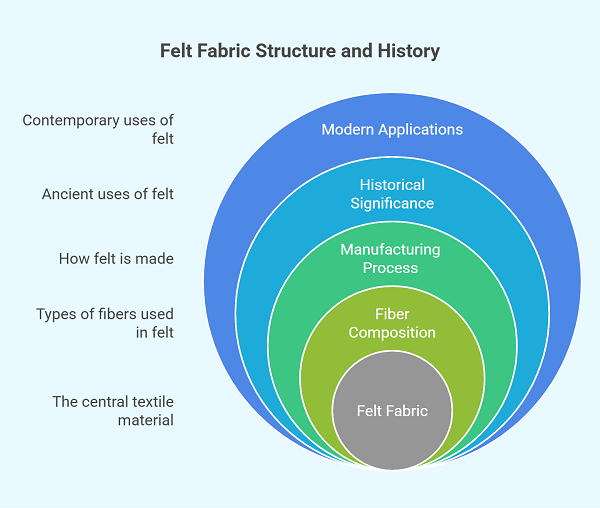
Nomadic tribes in Central Asia used felt for yurts, clothing, and armor padding. Fast-forward to today, and you’ll find it in everything from piano hammers to filtration systems.
How It’s Made (The Science Bit)
Felt is non-woven. It’s produced by matting and compressing fibers under heat, moisture, and pressure. The fibers entangle until they hold together. Think of it as organized chaos—fibers collide, bind, and lock. For wool, it’s all about the scales. Wool fibers have barbs that latch onto each other like Velcro.
Industrial felt can reach a density of 0.42 g/cm³ and thickness ranging from 1 mm to 25 mm. That’s no joke. It’s dense enough to absorb vibrations and act as insulation.
Types of Felt Fabric
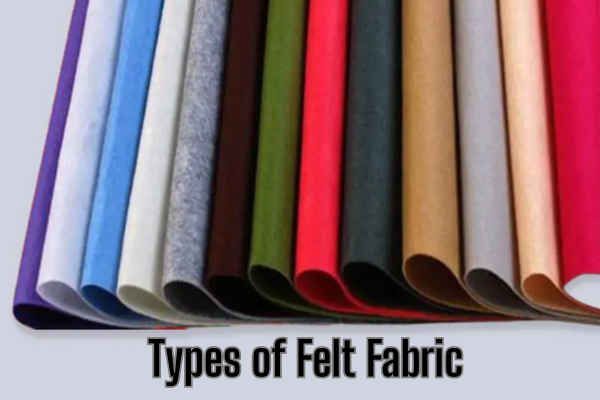
Natural Felt
Made from 100% animal fiber—mostly wool or alpaca. Wool felt is breathable, water-resistant, and flame-retardant. A typical wool felt has 70% to 100% wool content and weighs around 200–800 GSM.
Synthetic Felt
This version uses acrylic, rayon, or polyester. It’s cheaper and often used in disposable applications. Polyester felt is usually lighter (around 150–300 GSM) and resists mildew better than natural felt.
Pressed vs. Needle Felt
Pressed felt is created through heat and moisture, while needle-punched felt is mechanically entangled using barbed needles. Needle felt is common in automotive insulation and geotextiles.
Properties of Felt Fabric
Physical Properties
- Absorbency: Holds up to 30% of its weight in water.
- Density: Can vary from 0.1 g/cm³ (lightweight) to 0.42 g/cm³ (dense industrial grade).
- Durability: Depends on fiber and thickness. Wool felt lasts decades if cared for.
Chemical Resistance
Wool felt resists mild acids but degrades in alkalis. Polyester felt is better with solvents and moisture. That’s why synthetic felt dominates in chemical filtration systems.
Thermal Behavior
Wool felt naturally insulates. It has a thermal conductivity of 0.038 W/mK. In human terms? It keeps you warm without feeling bulky.
Uses of Felt Fabric
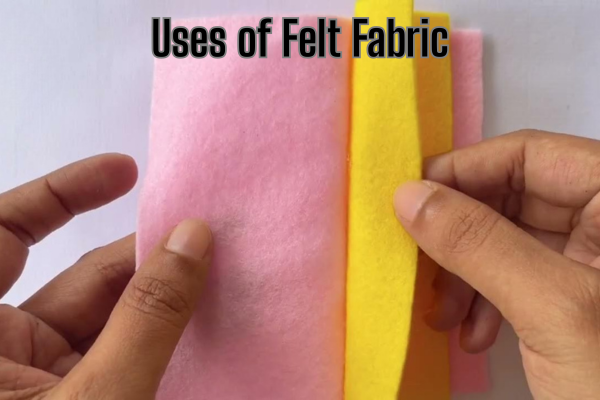
Industrial Applications
- Soundproofing: Felt panels reduce noise by 30–50 dB depending on thickness.
- Filtration: Used in oil, gas, and water filters.
- Machinery Padding: Reduces friction and absorbs vibration.
Fashion and Craft
- Millinery: Wool felt hats are iconic—Fedora, anyone?
- Craft Kits: Every child’s school project owes something to felt.
- Footwear: Think slipper soles and insulating boots.
Home and Interior Design
- Table Mats: Heat-resistant and stylish.
- Wall Panels: Acoustic felt tiles are a designer favorite.
- Furniture Liners: Protects flooring from scratches.
Pros and Cons of Felt Fabric
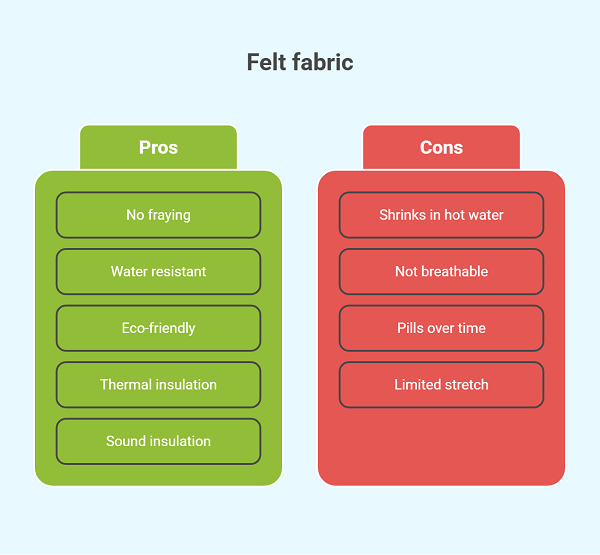
Why People Love It
- No fraying—cut and use.
- Water and stain resistant (especially wool).
- Eco-friendly if using 100% natural fibers.
- Excellent thermal and sound insulation.
Where It Falls Short
- Shrinks in hot water (wool especially).
- Not breathable in synthetic form.
- Pills over time.
- Limited stretch—don’t expect yoga pants out of it.
Care and Maintenance Tips
Cleaning Techniques
- Wool Felt: Spot clean or dry clean. Hand-washing shrinks it by up to 20%.
- Synthetic Felt: Machine washable (cold cycle). Avoid fabric softeners.
Storing Felt Properly
Store flat, dry, and away from direct sunlight. Folding can leave permanent creases. Use acid-free paper for long-term storage of wool felt.
Conclusion
Felt fabric is the unsung hero of textiles. It doesn’t unravel, it insulates like a champ, and it even survives the fashion world. From ancient Mongolian armor to acoustic panels in your home office, it’s everywhere. It may not drape like silk, but it holds a special place in utility and tradition. So next time you see a plain sheet of felt, don’t scoff—it might be doing more work than you think.
FAQs
1. Is felt fabric eco-friendly?
Yes, if it’s made from 100% wool or other natural fibers. Synthetic felt, not so much.
2. Can I iron felt fabric?
Use low heat with a pressing cloth. High heat scorches wool felt.
3. Does felt fabric stretch over time?
Nope. Felt lacks elasticity. It may compress but won’t stretch.
4. What makes felt waterproof?
Natural wool has lanolin, a waxy coating that repels water. Synthetic felt can be chemically treated for water resistance.
5. Where can I buy high-quality felt?
Textile wholesalers, craft stores, or online platforms like Fabric.com or Mood Fabrics offer a range of options in GSM, fiber content, and color.
