
What is Lace Fabric?
Let’s face it — lace fabric is basically the Audrey Hepburn of textiles. Classic, elegant, a bit delicate, and always stealing the spotlight. But what is lace fabric, really? Beyond its graceful appearance, lace is a surprisingly complex material used in everything from wedding dresses to luxury curtains.
Table of Contents
Let’s unravel the story.
A Brief History
Lace fabric dates back to the late 15th century. Italy and Belgium were the hot zones, producing handcrafted lace that sold for a fortune. In the 17th century, lace was so popular that some nobles spent over 30% of their clothing budget on it. Yes, lace fabric was that serious.

What Makes Lace Unique
Lace is made by looping, twisting, or braiding threads into patterns, often floral or geometric. Unlike woven fabrics, lace has open holes in its design. That’s right, it’s intentionally full of gaps and still wildly expensive.
Types of Lace Fabric

Let’s dig into the popular types. Each one brings something a little different to the table (or to the dress).
Chantilly Lace
Named after Chantilly, France. It’s lightweight, features fine details, and has a netted background. Popular for bridal wear. Costs range from $25 to $200 per yard, depending on intricacy.
Guipure Lace
No net background. The motifs are connected by thick bars or plaits. It feels heavier but is more durable. Guipure lace is widely used in fashion for bold, structured designs.
Alençon Lace
Also French. Nicknamed the “Queen of Lace.” Features a corded outline over the design and is usually embroidered on tulle. It’s stiff, perfect for veils and bodices.
Raschel Lace
Machine-made and budget-friendly. Found in lingerie, tops, and curtains. Raschel lace can cost under $5 per yard — lace on a budget!
Common Uses of Lace Fabric
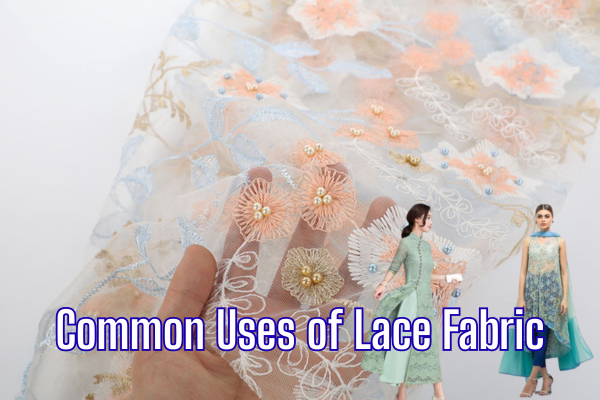
Lace isn’t just for royal weddings. It’s more versatile than you think.
Fashion and Apparel
- Wedding dresses (98% of bridal gowns use some form of lace)
- Evening gowns
- Blouses and skirts
- Lingerie (because elegance deserves comfort)
Home Decor
- Curtains
- Tablecloths
- Lampshades
- Throw pillow accents
Event Decoration
From backdrops to chair sashes, lace adds texture and grace to weddings, parties, and corporate events.
Properties of Lace Fabric
Lace isn’t just pretty. It’s a blend of function and form.
Texture and Appearance
- Delicate
- Airy
- Intricately patterned
- Available in various thread types: cotton, silk, nylon, or polyester
Durability and Maintenance
Natural lace (cotton, silk) is prone to yellowing and tearing over time. Synthetic lace (polyester, nylon) is more durable and easier to clean.
How Lace Fabric is Made
Traditional Techniques
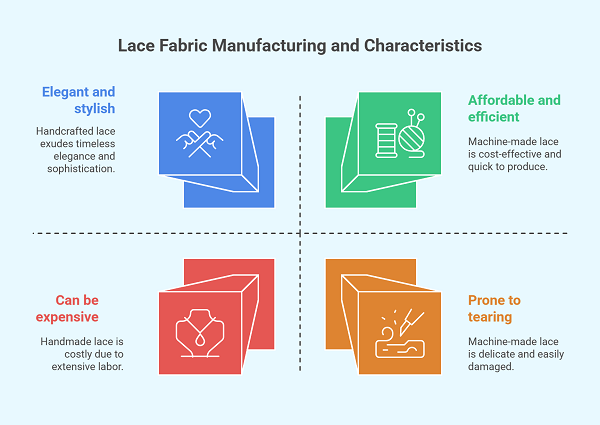
- Hand-stitched or bobbin-made
- Uses fine threads like silk or linen
- Could take weeks to finish one meter
Example: Handmade Belgian lace costs $300–$600 per yard. Yep, that’s real.
Modern Manufacturing
- Machine-made (Raschel machines)
- Affordable and efficient
- Widely used in mass-market fashion
About 85% of lace in the market is machine-made today.
Pros and Cons of Lace Fabric
| Pros | Cons |
| Elegant and stylish | Can be expensive |
| Lightweight and breathable | Prone to tearing |
| Versatile in use | Requires gentle care |
| Available in many patterns | May snag easily |
Care Instructions for Lace Fabric
- Hand wash only. Never toss lace in a regular machine cycle.
- Use mild detergent.
- Do not wring out. Just press gently with a towel.
- Air dry flat — no hanging, it stretches.
- For ironing, use low heat and always place a cloth over it.
Lace might be fragile, but treat it kindly and it will last for years.
Final Thoughts
Lace fabric might look soft and delicate, but behind those threads is a centuries-old story of craftsmanship, royalty, and reinvention. From hand-tatted masterpieces to modern-day machine lace, it continues to influence style in big ways. It’s more than a fabric. It’s texture. It’s emotion. It’s detail.
Whether you’re adding lace to your wardrobe or your home, it’s one investment that’ll never go out of style.
FAQs
1. What is lace fabric made of?
Lace fabric is typically made from cotton, silk, nylon, or polyester threads woven or looped into patterns.
2. Is lace fabric good for hot weather?
Yes. It’s lightweight and breathable, making it suitable for summer wear or tropical climates.
3. Can I machine-wash lace fabric?
Generally no. Lace is delicate. Hand washing is best to avoid damage or shrinkage.
4. Why is handmade lace so expensive?
Because it’s labor-intensive. One yard can take several days to weeks to complete, often requiring skilled artisans.
5. Is lace fabric stretchy?
Some lace fabrics like stretch lace have added spandex or Lycra, but traditional lace isn’t stretchy at all.
