
What Is Pocketing Fabric?
Ever reached into your pocket and found your fingers poking through a hole? We’ve all been there. Annoying, right? That humble pocket liner might seem insignificant, but the type of fabric inside your pockets plays a huge role in garment durability. Enter: pocketing fabric — the unsung hero of the apparel world.
Table of Contents
Let’s dive into the world of pocketing fabrics. It’s surprisingly vast, practical, and — dare I say it — kinda fascinating.
Definition and Purpose
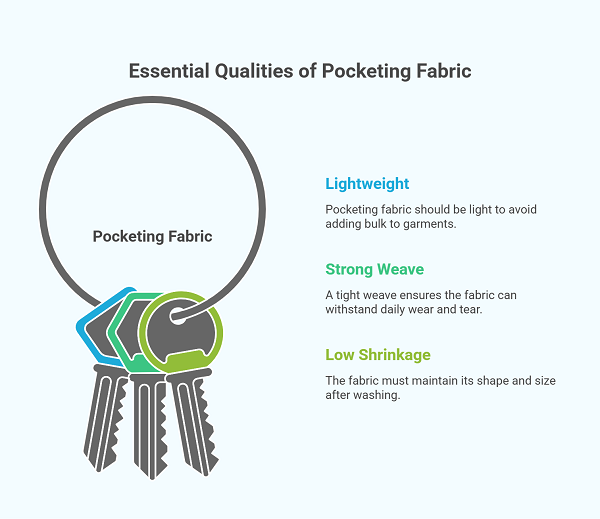
Pocketing fabric refers to the inner cloth sewn into the pocket bags of trousers, jeans, jackets, and shirts. It’s not flashy, but it must be durable, breathable, and smooth to the touch. It holds your coins, keys, and whatever other secrets you stash — day in and day out.
Key Characteristics of Pocketing Fabric
- Lightweight: Usually ranges from 80 to 150 GSM (grams per square meter).
- Strong weave: Typically plain or twill to withstand friction.
- Low shrinkage: Keeps its shape even after multiple washes.
Fun fact: A poor-quality pocketing fabric can reduce the lifespan of trousers by up to 30%.
Types of Pocketing Fabric
Cotton Pocketing Fabric
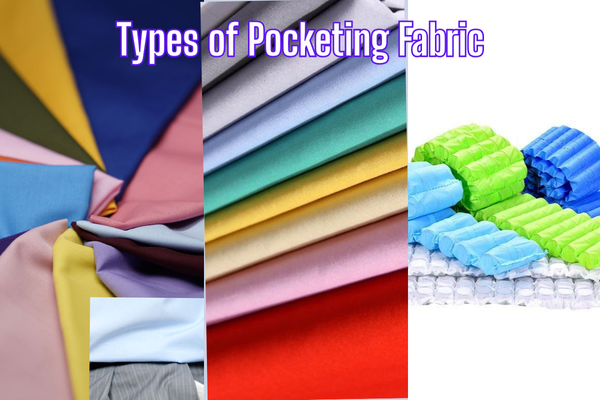
Pure cotton pocketing fabric is soft, breathable, and skin-friendly. It’s often used in high-end garments. Downside? It wrinkles and shrinks more than synthetic options.
Polyester and Blended Pocketing Fabric
Blends like 65% polyester / 35% cotton are common. Why? They’re stronger, cheaper, and more wrinkle-resistant. Polyester pocketing fabric alone is often used in heavy-duty workwear.
Non-Woven Pocketing Fabric
Think of this as the disposable cousin. It’s used in low-cost or one-time-use garments. Not breathable. Not fancy. Just functional.
Why Pocketing Fabric Matters in Apparel Manufacturing
Function Over Form
Garments aren’t just about looking good — they must function. Pocketing fabric prevents holes, protects the outer shell, and gives structure. Skimp here, and your 3,000-taka trousers turn into garbage after five washes.
How It Impacts Cost and Quality
Pocketing fabric can make up 5–8% of a trouser’s material cost. Sounds small? Sure. But it’s critical. Using low-grade material might save cents, but causes returns and customer dissatisfaction — which costs brands more in the long run.
Popular Pocketing Fabric Constructions
Twill Pocketing Fabric
Twill weave creates diagonal ribs. It offers:
- Strength and resistance to wear
- A smooth surface for comfort
Common in denim jeans and uniforms.
Plain Weave Pocketing Fabric
Simple crisscross pattern. Lightweight, breathable, and cost-effective. Perfect for casual trousers or women’s clothing where heavy-duty pockets aren’t needed.
Choosing the Right Pocketing Fabric
Durability and Strength
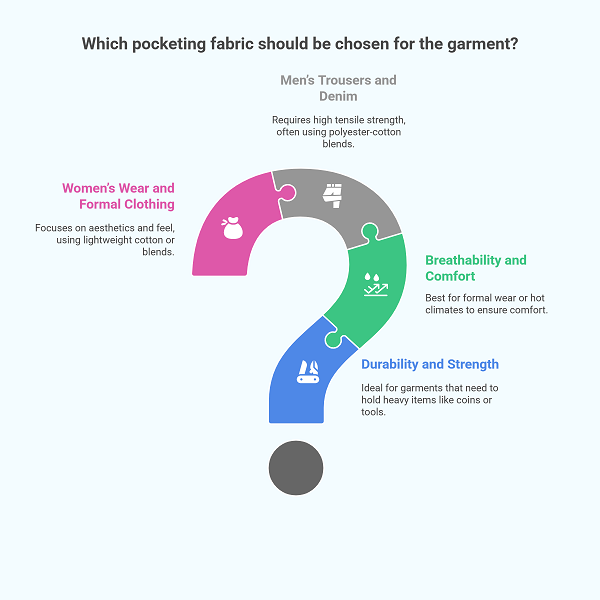
Ask yourself: Will the garment hold coins, phones, or tools? If yes, go for twill weave or polyester blends.
Breathability and Comfort
For formal wear or hot climates, cotton pocketing fabric offers better comfort. It keeps moisture at bay and prevents that sticky feeling in summer.
Pocketing Fabric in Different Garments
Men’s Trousers and Denim
These demand high tensile strength. Many factories opt for 110 GSM polyester-cotton blend, typically in grey or white.
Women’s Wear and Formal Clothing
More attention goes to aesthetics and feel. Lightweight plain weave cotton or blended pocketing works well here. Think of it like soft music playing in the background — subtle, but it adds to the experience.
Pocketing Fabric and Sustainability Trends
Recycled Polyester in Pocketing
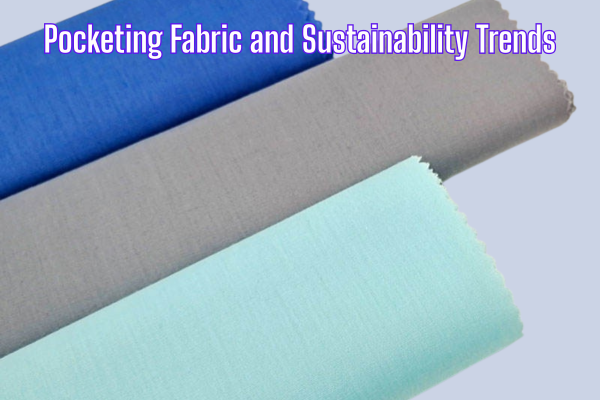
With over 8 million tons of plastic dumped in oceans annually, brands now use recycled PET bottles to make polyester pocketing fabric. Eco-friendly and just as strong. Win-win.
Organic Cotton Options
Organic cotton pocketing fabric is gaining traction too. Yes, it’s 15–20% more expensive, but environmentally conscious buyers are willing to pay for sustainability.
Conclusion
You probably never gave pocketing fabric a second thought before today. Now? You know it holds more responsibility than we ever imagined. It’s not flashy, but it quietly makes our clothes better, longer-lasting, and more functional.
Whether it’s the crisp lining inside a business suit or the rugged pocket of your jeans, pocketing fabric is the glue holding the garment together — one coin at a time.
FAQs About Pocketing Fabric
1. What is the standard GSM for pocketing fabric?
Pocketing fabric usually ranges between 80 to 150 GSM, depending on the garment type and required durability.
2. Is cotton or polyester better for pocketing?
Cotton offers comfort, while polyester provides strength and durability. Blends like 65/35 poly-cotton offer the best of both worlds.
3. Can pocketing fabric be dyed?
Yes. Though most pocketing fabric is left natural or white, it can be dyed to match the garment’s aesthetics — especially in designer or premium wear.
4. What causes pocketing fabric to tear easily?
Low GSM, poor-quality yarns, and loose weaves are the main culprits. Always check the construction before sourcing.
5. Are there sustainable options for pocketing fabric?
Absolutely. Recycled polyester and organic cotton are two widely used eco-friendly options gaining popularity across ethical fashion brands.
