
Sometimes, fabric hugs you back. That’s not a poetic exaggeration. That’s exactly how Terry knitted fabric feels like your clothes finally appreciate you. Let’s unravel this fluffy mystery.
Table of Contents
What is Terry Knitted Fabric?
Definition and Structure
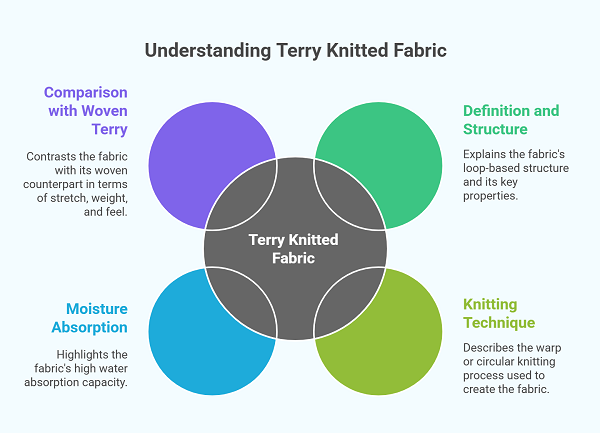
Terry knitted fabric is a loop-structured textile known for its softness, elasticity, and high moisture absorption. It features loops on one or both sides, created during the knitting process.
Unlike traditional woven terry which you’ll spot in classic bath towels, Terry knitted fabric uses a warp or circular knitting technique. The result? A softer, stretchier, and more breathable material.
Statistically speaking, terry knits can absorb 20x their weight in water. That’s serious soakage.
How It Differs from Woven Terry
Here’s the breakdown:
| Feature | Terry Knitted | Terry Woven |
| Stretch | High | Low |
| Weight | Lightweight | Heavy |
| Feel | Softer & flexible | Coarse & rigid |
| Typical Use | Garments, babywear | Towels, robes |
In short, terry knits = your cozy sweatshirt. Woven terry = your trusty bath towel.
Types of Terry Knitted Fabric
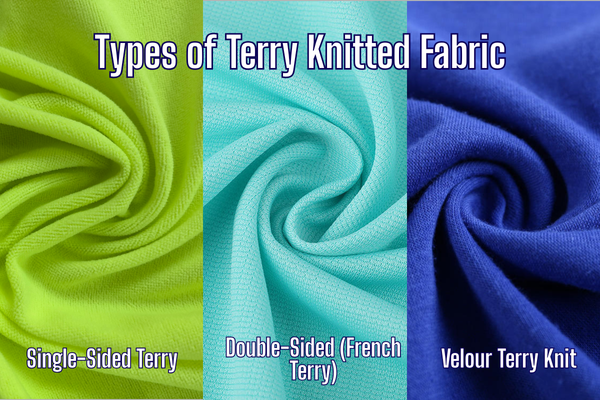
Single-Sided Terry
This one’s got loops on only one side—usually the inside—making it perfect for sweatshirts and hoodies. It keeps moisture away from your skin while keeping you comfy.
Double-Sided (French Terry)
French Terry has loops on one side, smooth knit on the other. It strikes the balance between absorbency and sleekness. Often used in joggers and casual blazers.
Velour Terry Knit
Take regular terry, shear those loops, and you’ve got velour terry—plush, shiny, and velvet-soft. It’s luxury loungewear at its best.
Properties and Performance
Absorbency and Comfort
Terry knitted fabric can hold up to 3x more water than jersey knit. That’s why it’s loved in baby towels and spa robes.
The looped structure traps air and water, giving it unmatched softness.
Stretch and Drape
Thanks to its knitted base, terry stretches with ease. It adapts to your body like a second skin without clinging. Perfect for everything from gym wear to toddler onesies.
Weight and Thickness
Typical GSM (grams per square meter) for terry knits ranges between 180–350. Lighter weights suit shirts and baby gear, while heavier ones bulk up sweatshirts.
Uses of Terry Knitted Fabric
Towels and Bathrobes
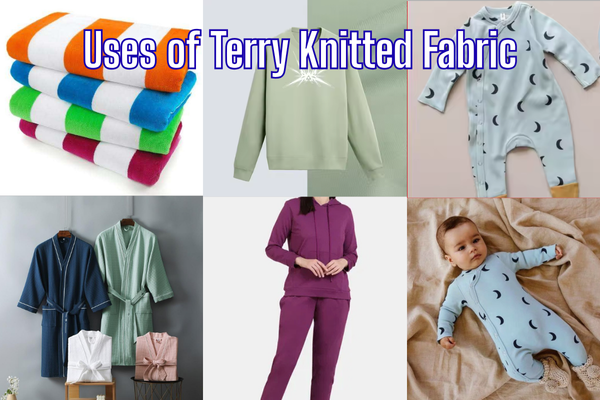
Yes, you can knit towels. Terry knitted towels dry fast, weigh less, and are easier to pack. They’re ideal for gym-goers and travelers.
Activewear and Loungewear
Moisture-wicking? Check. Breathable? Check. Stretchable? Double-check.
That’s why Terry knitted fabric dominates athleisure.
Babywear and Accessories
From bibs to onesies, it’s the go-to fabric for babies. Why? It’s gentle, breathable, and doesn’t irritate sensitive skin.
Pros and Cons
Advantages
- High Absorbency: Great for moisture-heavy applications.
- Stretch: Adapts to the body.
- Softness: Feels like a cloud on your skin.
- Breathability: Reduces sweating.
Limitations
- Pilling Risk: The loops may pill over time.
- Snagging: Loops can catch easily.
- Shape Retention: Without spandex, it may lose structure after multiple washes.
Care and Maintenance
Washing Tips
- Cold or lukewarm water is ideal.
- Avoid heavy-duty detergent—gentle works best.
- Use a mesh bag to protect those loops.
Drying and Ironing
- Air drying helps maintain loop integrity.
- If tumble drying, use low heat only.
- Iron on the reverse side if needed (but usually, wrinkles aren’t a concern).
Market Value and Price Range
Average Price Per Meter
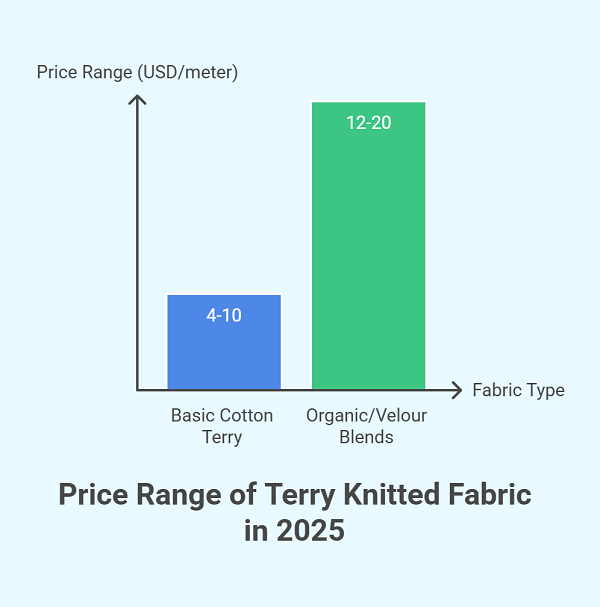
In 2025, Terry knitted fabric ranges between:
- $4–$10 USD/meter for basic cotton terry
- $12–$20 USD/meter for organic or velour blends
Prices spike based on loop density, GSM, and finish.
Demand in the Global Market
The global demand for knit terry surged 14% year-over-year in the casualwear segment between 2022 and 2024.
With rising loungewear trends and sustainable babywear, terry knits are now a staple in every modern fabric catalog.
Final Thoughts
Terry knitted fabric isn’t just a textile—it’s a lifestyle. It offers you a rare combo: luxury-level softness, workout-ready absorbency, and baby-appropriate gentleness. Whether you’re drying off or dressing down, this fabric always delivers.
It’s not perfect, but let’s be honest—what is? Except maybe freshly baked cookies and a well-worn terry hoodie.
FAQs
1. Is Terry knitted fabric good for hot weather?
Yes. It’s breathable and moisture-wicking, making it ideal for warmer climates.
2. Can Terry knit be used for yoga clothes?
Absolutely. Its stretch and absorbency make it a favorite for yoga, pilates, and casual workouts.
3. What’s the difference between French Terry and regular Terry?
French Terry has loops only on one side and a smoother finish, while regular terry can have loops on both sides.
4. Does Terry knitted fabric shrink after washing?
A little. Expect around 3–5% shrinkage if not pre-shrunk. Always check the care label.
5. Is Terry knitted fabric eco-friendly?
Depends on the yarn. Organic cotton terry and bamboo terry are sustainable options, while synthetic blends aren’t as green.
