
Let’s admit it — “Raschel knit fabric” doesn’t exactly roll off the tongue like “cotton” or “denim,” right? But don’t be fooled by the clunky name. This stuff is everywhere — from your sports jerseys to that comfy throw blanket on the couch.
Table of Contents
If you’ve never heard of it before, no worries. By the end of this article, you’ll know what Raschel knit fabric is, why industries love it, and how it might be quietly sitting in your closet right now.
What Is Raschel Knit Fabric?
A Brief Intro to Raschel Knitting
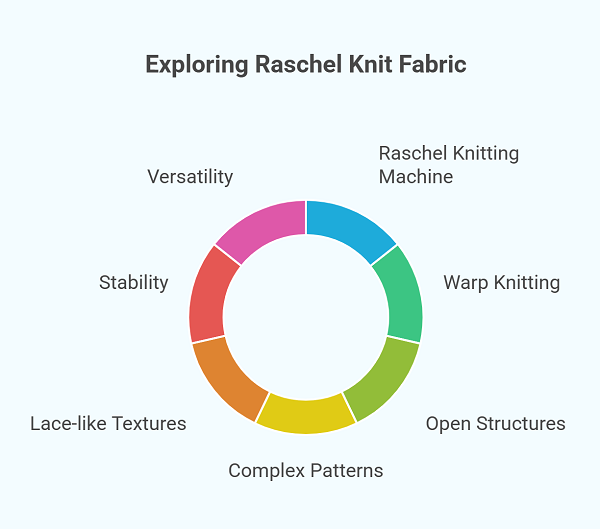
Raschel knit fabric is a warp-knit textile made using a Raschel knitting machine, which dates back to the 19th century. Unlike weft knitting (like your grandma’s hand-knit sweater), warp knitting involves yarns running vertically. Think of it like dozens of little soldiers marching straight and orderly—except these soldiers are made of yarn and love flexibility.
This knitting style creates open structures, complex patterns, and sometimes even lace-like textures that make Raschel knit fabric unique.
How Raschel Knit Fabric Differs from Other Knits
Let’s compare:
- Jersey knit? Great for tees.
- Interlock knit? Nice for leggings.
- Raschel knit fabric? Versatile, sturdy, and way more industrial.
Unlike circular knits that curl and stretch like a yoga instructor, Raschel knit fabric is stable, structured, and often thicker.
How Is Raschel Knit Fabric Made?
The Machinery Behind the Magic
The Raschel knitting machine is a beast. With up to 48 guide bars and hundreds of needles, it creates intricate designs at speed. These machines can produce up to 1,200 stitches per minute, making them a workhorse in modern textile factories.
The use of multiple yarn guides gives Raschel knit fabric its signature grid-like or lace patterns. And if you’re wondering — yes, it’s mesmerizing to watch.
Common Fibers Used in Raschel Knitting
Raschel knit fabric can be made from a range of fibers:
- Polyester (most common — for sportswear and netting)
- Nylon (lightweight and stretchy)
- Cotton blends (for added comfort)
- Rayon and viscose (when softness matters)
Most commonly, you’ll find polyester Raschel knits, known for durability and easy care.
Key Characteristics of Raschel Knit Fabric
Texture, Weight, and Durability
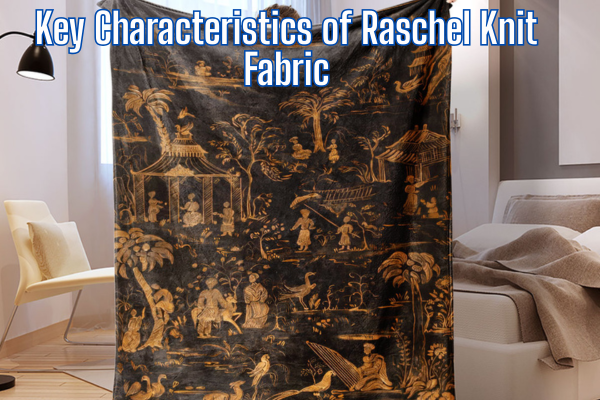
Here’s the cool part: Raschel knit fabric can mimic lace or mesh but still hold its structure. It’s tear-resistant, won’t snag easily, and typically ranges between 80 to 350 GSM (grams per square meter).
Statistically, it lasts 40–60% longer than standard jersey fabrics under high-stress use.
Breathability and Stretch
Don’t expect yoga-pant-level stretch. Raschel knit fabric has moderate flexibility, especially across the width. But it’s breathable, thanks to its open-loop construction. That makes it perfect for sports uniforms, mosquito nets, and lightweight blankets.
Popular Uses of Raschel Knit Fabric
Fashion and Apparel
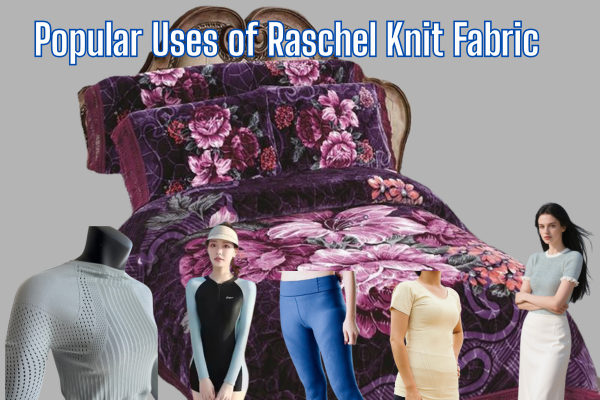
While not typically seen on runways, Raschel knit fabric in sportswear is booming. Think:
- Football jerseys
- Track jackets
- Lingerie and lace trims
Its breathability and quick-dry nature are top-notch.
Industrial and Technical Applications
This is where Raschel knit fabric becomes the MVP:
- Car seat covers
- Reinforcement meshes
- Medical bandages
- Military netting
In fact, a 2024 report found Raschel-based fabrics are now used in over 30% of technical textile innovations.
Home Textiles
- Blankets and throws
- Curtains
- Decorative lace
Its soft touch and easy care make Raschel knit fabric a staple for cozy households.
Advantages and Disadvantages
Pros of Raschel Knit Fabric
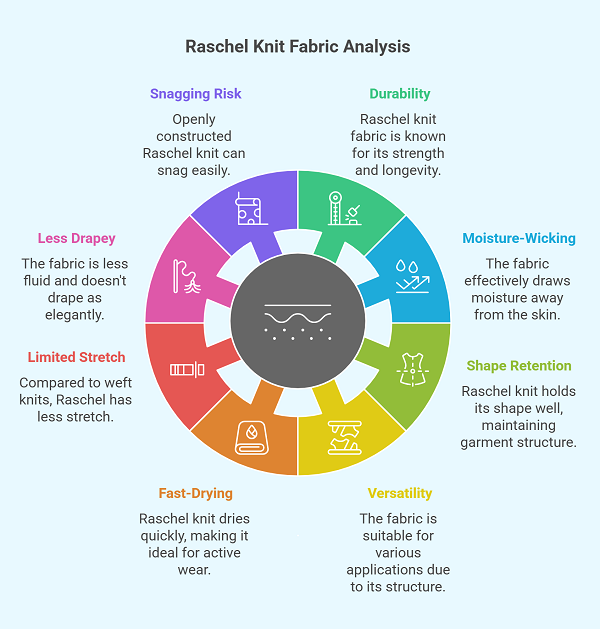
- Extremely durable
- Moisture-wicking
- Holds shape well
- Versatile structure
- Fast-drying
Cons to Consider
- Limited stretch compared to weft knits
- Less drapey
- Can snag if constructed too openly
Still, for industrial use and structured garments, Raschel knit fabric is unbeatable.
Tips for Caring for Raschel Knit Fabric
- Wash in cold water
- Use mild detergent
- Avoid high heat in the dryer
- Lay flat or hang to dry
Pro tip: If your Raschel blanket pills, try a fabric shaver. It’s oddly satisfying.
Conclusion
So, next time you’re wrapped in a stadium blanket or adjusting your mesh jersey, think of Raschel knit fabric. It may not be the flashiest textile, but it’s a quiet powerhouse — tough, adaptable, and oddly elegant.
Whether you’re into fashion, home décor, or technical fabrics, Raschel knit fabric deserves a second look. Sometimes, the quietest materials make the loudest impact.
FAQs About Raschel Knit Fabric
1. Is Raschel knit fabric breathable?
Yes. Thanks to its open construction, Raschel knit fabric allows air to flow freely.
2. Can Raschel knit fabric stretch?
It stretches a little across the width, but not as much as traditional weft knits.
3. What makes Raschel knit fabric unique?
Its warp-knit structure allows complex designs and great durability — perfect for lace, mesh, and industrial use.
4. Is Raschel knit fabric suitable for hot weather?
Absolutely. It wicks moisture and dries quickly, which makes it ideal for sportswear in warm climates.
5. How can I tell if a fabric is Raschel knit?
Look for a grid-like pattern, slightly stiff hand feel, and durability. If it’s lacey or mesh-like but strong, it’s probably Raschel.
