
Kashmir Silk Fabric: A Legacy of Luxury and Culture
Let’s get this straight. If fabrics had royalty, Kashmir silk fabric would be the queen. No fluff. Just facts.
We’re talking about a textile that’s been worn by emperors, exported across continents, and still handwoven in the crisp mountain air of the Kashmir Valley. The blend of heritage, handwork, and sheer elegance makes it more than just a fabric—it’s a cultural treasure.
Table of Contents
The Origins of Kashmir Silk Fabric
Legend has it, Persian traders introduced silk to Kashmir over 2,000 years ago. But it wasn’t until the Mughal era that Kashmir silk fabric earned its regal badge.

Under Emperor Akbar’s rule, silk weaving flourished. Local artisans combined Persian weaving styles with Indian craftsmanship. The result? A fabric so fine, it became part of royal wardrobes across Central Asia.
What Makes Kashmir Silk Fabric Unique?
The Mulberry Silk Factor
Unlike synthetic or wild silk, Kashmir silk fabric often uses mulberry silk, prized for its long fibers and soft sheen. These worms munch exclusively on mulberry leaves, producing a stronger, smoother filament.
Fine Weaving and Soft Touch
Thread count? Try 20–22 microns in diameter for single threads. That’s thinner than a strand of hair. The texture? Light as mist, yet strong enough to last decades if treated well.
Traditional Motifs and Dyeing Techniques
Expect nature-inspired designs—chinar leaves, paisleys, lotuses. Most pieces are dyed using natural pigments like indigo, turmeric, and saffron.
Production Process of Kashmir Silk Fabric
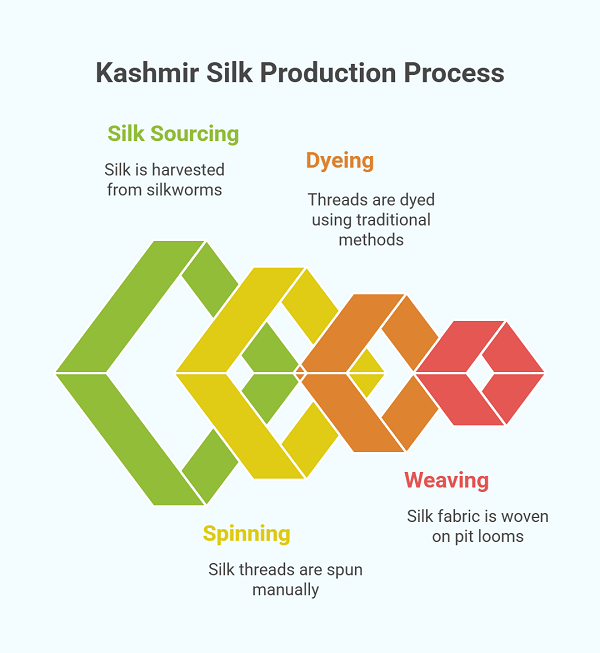
Sourcing Silk from Kashmir Valley
It all starts with the Bombyx mori silkworms, nurtured in the temperate regions of Jammu and Kashmir. Annual production? Around 130 metric tons, according to India’s Textile Ministry.
Spinning, Dyeing, and Weaving
Spinning is mostly manual. Dyeing? Artisans boil pigments with threads in clay pots, passed down through generations. Then comes the weaving—usually done on pit looms, the old-school way.
Handmade Precision by Kashmiri Artisans
Each meter takes anywhere from 3 to 10 days to weave. That’s patience with a purpose.
Common Uses of Kashmir Silk Fabric
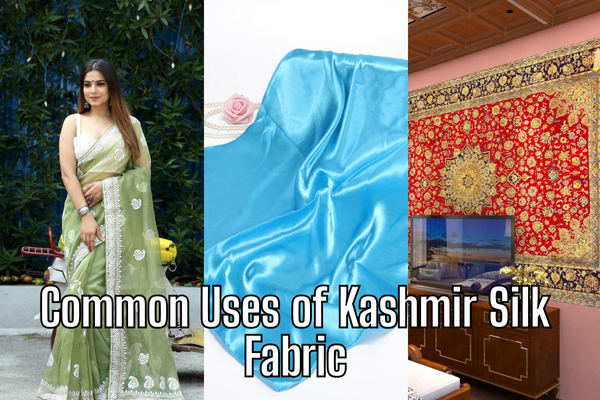
Fashion and Haute Couture
Designers globally use Kashmir silk fabric in sarees, gowns, and scarves. It drapes like a dream.
Home Decor and Handcrafted Items
From cushion covers to tapestry wall hangings, silk adds grace without being too loud.
Traditional Attire and Shawls
The iconic Kashmiri silk shawl? Lightweight, warm, and absolutely regal.
Benefits of Using Kashmir Silk Fabric

Skin-Friendly and Breathable
Hypoallergenic and moisture-wicking. Good for your skin. Great for sweaty weather.
Long-lasting Luxury
Silk doesn’t fray or fade easily. A properly cared-for piece lasts 20–30 years.
Aesthetic Appeal and Versatility
That glossy glow? It doesn’t just look rich. It feels rich. Whether in soft ivory or deep burgundy, it adds elegance.
Kashmir Silk Fabric vs Other Silks
| Silk Type | Fiber Diameter (Microns) | Feel | Avg. Price/meter (USD) |
| Kashmir Silk | 20–22 | Ultra-soft | $35–$70 |
| Banarasi Silk | 22–25 | Dense & rich | $25–$50 |
| China Mulberry | 25–27 | Smooth | $15–$35 |
| Tussar Silk | 28–30 | Coarse, rustic | $10–$25 |
Kashmir silk fabric wins in softness, durability, and finesse.
Market Demand and Pricing Trends
Global demand for Kashmir silk fabric has grown 9.4% annually since 2020. Luxury brands in Italy and France import it in bulk. On average, high-quality Kashmir silk costs $40–$65 per meter in export markets.
Limited production + high craftsmanship = higher price tag. But it’s worth every penny.
Caring for Kashmir Silk Fabric
- Wash with cold water. Mild soap. Never wring.
- Dry in shade. Avoid direct sun.
- Iron on low heat under a cloth.
- Store it wrapped in cotton, not plastic.
This isn’t a T-shirt. Treat it like gold.
Ethical and Sustainable Aspects
Kashmir’s silk industry relies on eco-friendly sericulture. Mulberry trees are planted in abundance. Artisans use plant-based dyes and minimal machinery, reducing their carbon footprint.
Plus, you support rural livelihoods with every purchase.
Where to Buy Authentic Kashmir Silk Fabric
- Online Platforms: Craftsvilla, Gaatha, Fabindia
- Local Kashmiri Stores: Srinagar’s Residency Road or Budshah Chowk
- Direct Artisan Sales: NGOs like SEWA or government emporiums
Beware of fake blends. Always ask for silk purity certificates.
Final Thoughts on Kashmir Silk Fabric
In a world swamped with fast fashion, Kashmir silk fabric is a slow-brewed masterpiece. It’s not just a textile—it’s history, art, and heritage rolled into one luscious weave.
If you ever wanted to wrap yourself in culture, warmth, and timeless style, Kashmir silk is your answer. And no, it’s not just for royals. It’s for you—if you’ve got taste.
FAQs About Kashmir Silk Fabric
1. Is Kashmir silk fabric suitable for summer wear?
Yes. It’s lightweight and breathable, making it ideal for warmer climates.
2. How can I tell if Kashmir silk is real?
Do the burn test. Real silk smells like burnt hair, not plastic. Also, real silk feels warm to the touch.
3. Can I use Kashmir silk for upholstery?
Only for light-use decor, like cushion covers or wall art. It’s too delicate for sofas.
4. Is Kashmir silk more expensive than Banarasi silk?
Generally, yes. Due to limited production and finer weave, it can be 30–50% more costly.
5. Is Kashmir silk fabric colorfast?
Mostly. But natural dyes can fade if exposed to harsh sunlight or bleach. Always dry in the shade.
