
What is Khadi Fabric?
Khadi fabric isn’t just cloth. It’s a revolution you can wear. This handspun, handwoven fabric stands tall as the pride of India’s textile history. Made from cotton, silk, or wool, Khadi fabric is spun on a charkha, giving it a rough texture and natural finish. But beyond its appearance, it carries a powerful story of freedom, simplicity, and sustainability.
Table of Contents
The Humble Origins of Khadi
Gandhiji’s Role in the Khadi Movement
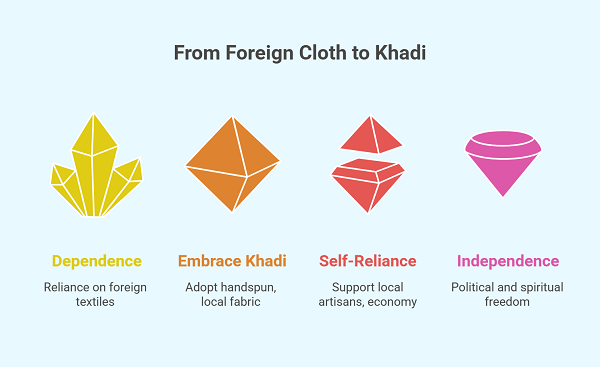
Let’s rewind to pre-independence India. When Mahatma Gandhi picked up the spinning wheel, it wasn’t just about making yarn. It was about breaking chains. Gandhiji urged Indians to ditch foreign cloth and embrace Khadi fabric, turning the humble textile into a political statement. He believed spinning Khadi was a way to self-purify and achieve independence—both politically and spiritually.
Symbol of Self-Reliance and Resistance
Khadi wasn’t just resistance. It was identity. Wearing Khadi fabric meant you supported local artisans, refused industrial exploitation, and embraced simplicity. In 1925, nearly 5,000 Khadi production centers had popped up across India, engaging over 350,000 rural workers. That’s some serious grassroots power.
How Khadi Fabric is Made
The Spinning Process: From Cotton to Yarn
It all starts with raw cotton. After carding (basically detangling and aligning), the fiber is handspun on a charkha. No electricity, no automation—just pure muscle and tradition. It takes one artisan up to eight hours to spin 300 grams of yarn. No shortcuts.
Handweaving: The Soul of Khadi
Next, the yarn is loaded onto handlooms and woven by skilled weavers. Each weft and warp is carefully adjusted. Even one mistake? The entire length has to be redone. This manual labor gives Khadi fabric its unique irregular texture—no two pieces are ever the same.
Natural Dyes and Eco-Friendliness
Most Khadi is dyed using natural plant-based dyes like indigo, turmeric, or madder root. That means zero chemicals and less water use—some studies suggest Khadi dyeing consumes 40% less water than synthetic methods.
Key Characteristics of Khadi Fabric
Breathable, Durable, and All-Season
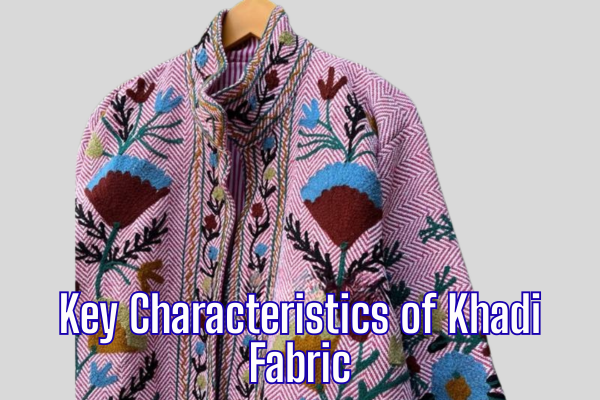
Ask any Indian elder—Khadi breathes like no other. Thanks to its coarse weave, it allows air circulation, making it ideal for hot summers. Wool Khadi, on the flip side, retains warmth in winter. It’s a four-season wonder.
Texture, Weight & Appearance
Khadi fabric has a rustic, raw appeal. It’s not glossy, but it ages gracefully. Unlike machine-made cloth, it softens with every wash. The GSM (grams per square meter) of Khadi cotton varies from 100 to 250, depending on the weave.
Variations: Muslin Khadi, Silk Khadi, and Wool Khadi
- Muslin Khadi: Lightweight, soft, often translucent. Ideal for scarves, dupattas, or formalwear.
- Silk Khadi: Luxurious, slightly glossy, and used in sarees or blouses.
- Wool Khadi: Warm, rugged, and perfect for jackets or shawls.
Uses of Khadi Fabric in Modern Fashion
From Politicians to Paris: It’s Everywhere Now
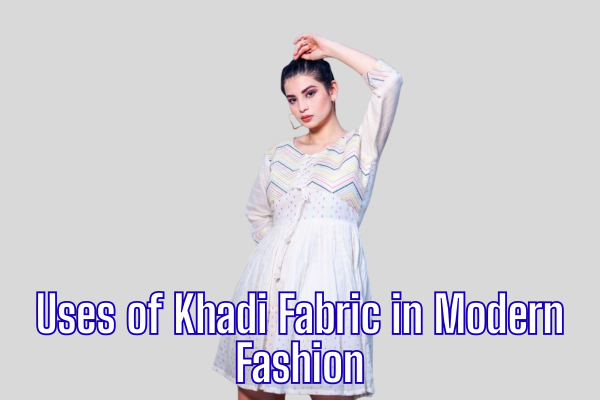
Khadi is no longer confined to dusty government outlets or political rallies. Today, it’s on runways. From Ritu Kumar to Abraham & Thakore, designers are turning Khadi fabric into fashion statements. Even Fabindia, a retail giant, claims that over 40% of their fabric collection is Khadi-based.
Designers Who Swear by Khadi
Top names like Sabyasachi Mukherjee have used Khadi in bridal wear. Why? Because it blends heritage with style. Each wrinkle tells a story; each fold whispers tradition.
Everyday Clothing to Luxury Couture
From crisp shirts to boho dresses, Khadi fits all. Want comfort? Khadi kurta. Want class? Silk Khadi gown. It’s like tofu—it soaks in whatever flavor you add.
Is Khadi Fabric Sustainable?
Zero Machines, Minimal Carbon
This is where Khadi truly wins. No massive factories. No carbon emissions. One meter of machine-made cloth emits 3.5 kg CO₂, while Khadi emits barely 0.15 kg CO₂. It’s like comparing a bicycle to a bulldozer.
Supporting Rural Artisans and Circular Economy
Every purchase supports India’s millions of artisans, most of whom live in villages. In fact, over 1.5 million people rely on Khadi production for livelihood. That’s more than just fabric—that’s food on the table.
The Future of Khadi Fabric
Tech Meets Tradition
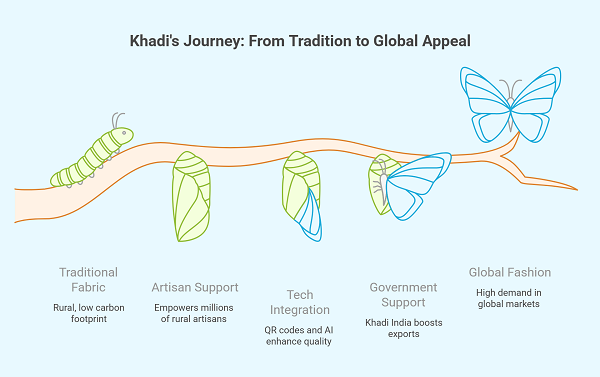
You wouldn’t expect Khadi to be cool, but things are changing. QR-coded labels now track artisan details. AI tools help in quality control. Yes, even Khadi is getting digital.
Government Initiatives & Global Markets
Thanks to schemes like Khadi India, exports have jumped. Between 2021 and 2024, Khadi exports saw a 65% rise, with demand from the US, UK, and Japan growing fast. The fabric that once fought colonial rule now rules global fashion.
Conclusion
Khadi fabric isn’t just a piece of cloth. It’s India’s soul—handwoven, resilient, and timeless. In a world racing toward fast fashion, Khadi whispers, “Slow down.” It invites us to choose handmade over machine-made, heritage over hype. If fashion is expression, Khadi is a revolution draped in cotton.
FAQs
1. Is Khadi fabric suitable for summer?
Yes, absolutely. It’s breathable and keeps you cool even in 40°C heat.
2. How can you tell if Khadi is genuine?
Real Khadi has irregular weaves. Also, check for the Khadi India certification tag.
3. Does Khadi shrink after washing?
Yes, by about 4–6% on the first wash. Pre-wash your fabric to avoid surprises.
4. Is Khadi fabric expensive?
Not always. Basic cotton Khadi costs around ₹100–₹300 per meter, while silk Khadi can go up to ₹1,000+ per meter.
5. Can Khadi be dyed in bright colors?
Definitely. Though traditionally earthy tones are common, many brands now offer vibrant dyed Khadi in blues, reds, and greens.
