
What Is Khaki Fabric?
Let’s not pretend khaki fabric screams excitement. It’s not silk. It’s not lace. But here’s the plot twist—it doesn’t need to be. Khaki fabric plays the underdog so well that it became a global essential. It’s practical, versatile, and has stood the test of time.
Table of Contents
Origin and History of Khaki Fabric
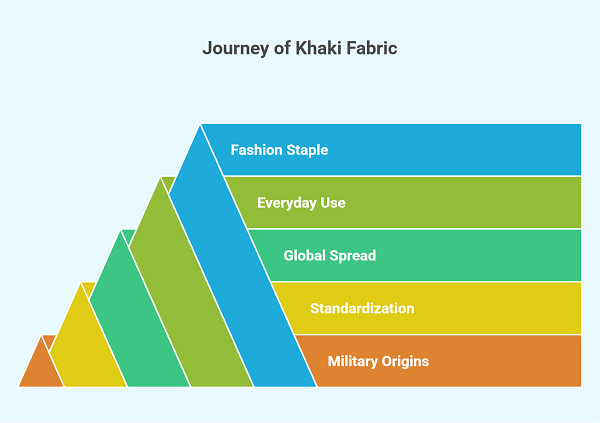
The Military Connection
The word “khaki” means “dust” in Persian. British soldiers in India dyed their white uniforms using mud, tea, and curry powder. Talk about DIY fashion in the 1800s. By 1848, khaki uniforms became standard for British colonial forces, eventually spreading worldwide.
Evolution to Everyday Use
Fast forward to the 20th century—khaki fabric made the leap from battlefields to closets. It became a staple in men’s slacks during the 1950s and later caught the eye of streetwear and high fashion brands alike.
What Is Khaki Fabric Made Of?
Natural vs Synthetic Blends
Most khaki fabric today is cotton-based, but it’s rarely just pure cotton. You’ll often find blends like:
- Cotton-polyester (65/35) – adds wrinkle resistance
- Cotton-spandex (98/2) – offers stretch for better movement
These blends strike a balance between comfort and durability. It’s the fabric equivalent of wearing sneakers to a meeting—practical and still sharp.
Most Common Weaves in Khaki
Khaki fabric usually comes in these weaves:
- Twill weave – recognizable by its diagonal ribs
- Plain weave – flat and tightly woven
Twill is the go-to for khaki trousers and uniforms. It doesn’t wrinkle easily, and it’s a workhorse.
Characteristics of Khaki Fabric
Color Confusion: Khaki vs Khaki Fabric
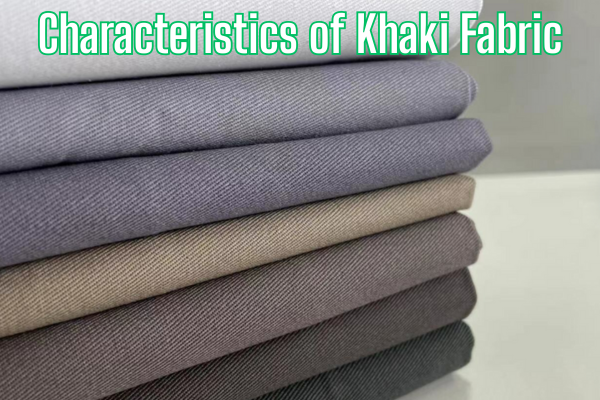
Here’s where it gets messy—khaki is a color and a fabric. The color? A dusty tan. The fabric? A strong, medium-weight woven textile, typically in that tan color but available in greens, blues, even grays. Confused? You’re not alone.
Durability and Performance
Strength Under Stress
Khaki fabric’s tensile strength is no joke. Cotton twill khaki has a breaking strength of over 400 Newtons, which is why it’s used in uniforms and workwear.
Wear-Resistance in Real Life
In abrasion tests, khaki fabric outlasts linen and most denim blends. That’s why it’s favored in garments that need to handle wear and tear—construction uniforms, delivery gear, or military fatigues.
Comfort and Aesthetic Appeal
Despite its toughness, khaki fabric doesn’t feel like cardboard. Thanks to cotton’s breathability and modern stretch blends, it remains comfy during long work hours or casual strolls.
Uses of Khaki Fabric Today
Khaki in Fashion
Streetwear and Smart Casuals
From khaki chinos to jackets, the fabric shows up in collections by brands like Dockers, Uniqlo, and Ralph Lauren. A pair of well-fitted khaki pants can replace jeans on a dressy casual day.
Industrial and Utility Applications
Uniforms and Workwear
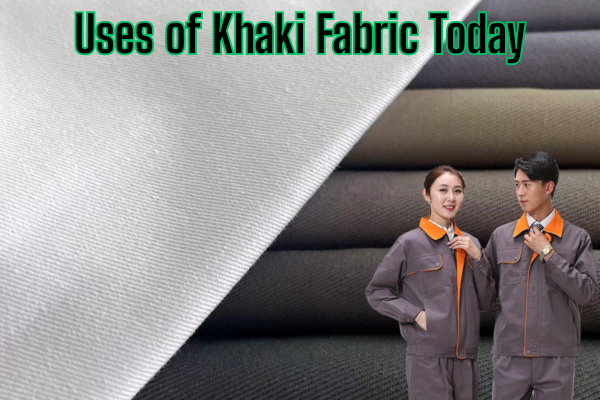
Stat alert: Around 65% of industrial uniforms in North America use khaki blends. Think police, warehouse, and factory gear.
Outdoor and Tactical Gear
The military hasn’t let go of khaki. It’s still favored for camouflage adaptations in desert zones. Outdoor brands also use it for lightweight, weather-resistant clothing.
How to Care for Khaki Fabric
Washing and Drying Tips
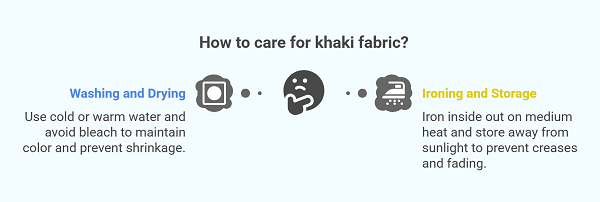
- Use cold or warm water (below 40°C)
- Avoid bleach—it alters the khaki color
- Tumble dry on low or air-dry to reduce shrinkage
Ironing and Storage Advice
- Iron inside out on medium heat
- Hang to avoid creases
- Store away from direct sunlight to avoid fading
Khaki fabric is easy to manage—unlike high-maintenance fabrics that demand steamers and silk sprays.
Conclusion: Why Khaki Fabric Isn’t Boring—It’s Brilliant
Khaki fabric isn’t trying to dazzle. It’s the quiet type—the dependable one you want on your team when things get real. It works, lasts, and somehow fits into just about every outfit, from uniforms to runway.
Don’t let the simplicity fool you. Behind the muted tone is a textile engineered for action, comfort, and timeless appeal.
FAQs about Khaki Fabric
1. Is khaki fabric waterproof?
No, khaki fabric is not naturally waterproof. However, treated versions with DWR coatings exist for tactical and outdoor wear.
2. Can khaki fabric shrink after washing?
Yes, especially if it’s 100% cotton. Pre-shrunk blends reduce this risk. Always follow care labels.
3. Is khaki fabric breathable in hot weather?
Absolutely. Cotton-based khaki allows airflow, making it suitable for summer wear.
4. What’s the difference between khaki and chino?
Khaki refers to the fabric and often the color, while “chino” is a style of pant often made from khaki fabric. Think of it as form vs material.
5. Is khaki fabric eco-friendly?
It depends on the blend. Organic cotton khaki is sustainable. But synthetic blends may involve petrochemicals and longer biodegradation times.
