
Neoprene Fabric – What It Is and Why Everyone’s Talking About It
Let’s get one thing straight—Neoprene fabric isn’t just for wetsuits anymore. You’ll find it in laptop sleeves, fashion pieces, orthopedic braces, and even car seat covers. Sounds like an overachiever, right?
But what exactly is it? Where does it come from? And why does it smell… kind of like a tire?
Table of Contents
Let’s dive in (pun intended).
What Is Neoprene Fabric?
Neoprene fabric is made from synthetic rubber, technically known as polychloroprene. It’s a closed-cell foam—that’s just a fancy way of saying it traps gas bubbles inside, making it flexible, buoyant, and a solid insulator.
Originally created by DuPont in 1930 (yes, it’s over 90 years old!), it’s been loved by industries ever since.
Key Characteristics of Neoprene
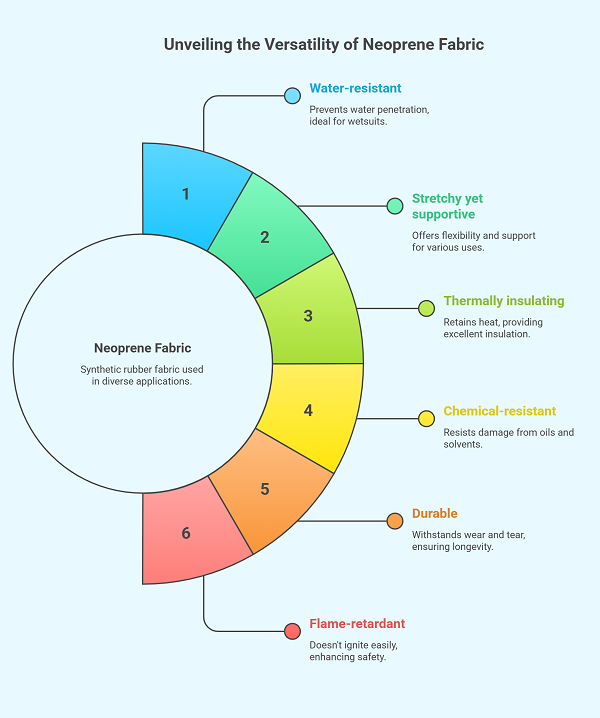
- Water-resistant: The biggest reason it’s the go-to for wetsuits. No soggy surprises.
- Stretchy yet supportive: Perfect balance between compression and comfort.
- Thermally insulating: Keeps body heat locked in. Not just warm—toasty.
- Chemical-resistant: Doesn’t throw a tantrum when exposed to oils or solvents.
- Durable: It won’t rip or tear easily. Stronger than your last New Year’s resolution.
Is Neoprene Flammable?
Not exactly. It’s flame-retardant, meaning it doesn’t catch fire easily. That’s why firefighters, racers, and folks who live dangerously often trust it.
Where Is Neoprene Fabric Used?
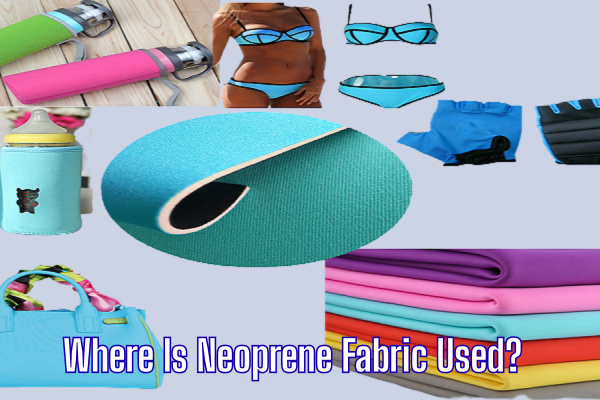
You’d be shocked where this stuff shows up. It’s like the Swiss army knife of textiles.
Sports and Outdoor Gear
- Wetsuits & drysuits: Retains body heat like a warm hug from the ocean.
- Surf gear & gloves: Keeps extremities functional in freezing water.
- Elbow and knee supports: Neoprene compresses and stabilizes like a champ.
Tech Accessories
- Laptop sleeves & phone cases: Shock absorbent. Stylish too.
- VR gear padding: Soft but structured—just how we like our headsets.
Industrial and Automotive Uses
- Gaskets & seals: It handles pressure and heat like a pro.
- Car seat covers: Stain-resistant and easy to wipe—perfect for snack-spilling toddlers.
Fashion
Yes, fashionistas love neoprene now.
- Neoprene skirts and dresses: Structured silhouette? Check.
- Handbags and totes: Durable, waterproof, and totally Instagram-worthy.
Advantages and Disadvantages of Neoprene Fabric
Let’s keep it real. No fabric is perfect (except maybe your favorite hoodie).
Pros of Neoprene Fabric
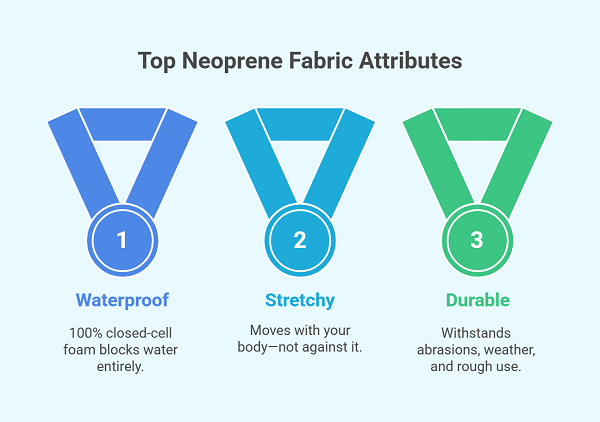
- Waterproof: 100% closed-cell foam blocks water entirely.
- Stretchy: Moves with your body—not against it.
- Durable: Withstands abrasions, weather, and rough use.
- Heat-resistant: Great for extreme environments.
- Chemical resistance: Laughs in the face of oil and grease.
Cons of Neoprene Fabric
- Heavy: Not feather-light like spandex or nylon.
- Non-breathable: Traps sweat. Not ideal for hot, humid conditions.
- Eco-impact: It’s petroleum-based. Not Mother Nature’s favorite.
- Smell: Let’s be honest—it stinks when new. Like a tire store exploded.
Fun Facts and Stats About Neoprene Fabric
- Temperature resistance: Can handle from -50°C to 120°C. That’s Arctic chill to boiling heat.
- Water absorption: Less than 2% by weight. Basically waterproof.
- Density range: Around 1.23 g/cm³—that’s heavier than most common fabrics.
- Market demand: The global neoprene market hit $2.1 billion in 2023. That’s no joke.
You see? Numbers don’t lie.
Is Neoprene Fabric Eco-Friendly?
Sadly, no. It’s made from chloroprene, a chemical derived from crude oil. The manufacturing process can release toxic compounds like VOC (volatile organic compounds).
But the industry’s trying. Newer versions use limestone-based neoprene or recycled rubber to reduce the carbon footprint.
So yeah—greener neoprene is coming. Slowly.
How to Care for Neoprene Fabric
You don’t need a PhD to keep it clean. But a few dos and don’ts go a long way.
Cleaning Tips
- Use mild detergent: Harsh chemicals ruin it.
- Air-dry only: No dryers. Heat degrades it fast.
- Rinse after saltwater use: Salt speeds up wear and tear.
What to Avoid
- Don’t machine wash (unless the tag says so).
- Don’t fold for long periods—it’ll crease.
- Don’t hang it in direct sunlight. UV = fabric death.
Final Thoughts – Is Neoprene Fabric Worth It?
Here’s the thing—neoprene fabric is like that overqualified intern: smart, strong, and incredibly versatile. From sports to style, it delivers. Is it breathable? No. Is it eco-perfect? Also no.
But is it useful, durable, and reliable? Absolutely.
If you need insulation, water resistance, and structure, neoprene fabric is your friend. Just maybe give it a wash before wearing—unless you enjoy smelling like a tire shop.
FAQs About Neoprene Fabric
Q1. Is neoprene fabric waterproof or just water-resistant?
It’s fully waterproof due to its closed-cell structure. It blocks water completely.
Q2. Can you wear neoprene in hot weather?
Not ideal. It traps heat. You’ll probably sweat like a sponge in a sauna.
Q3. Is neoprene safe for sensitive skin?
For most people, yes. But some may react to the rubber or chemicals used. Test first.
Q4. Can neoprene be recycled?
Traditional neoprene? Tough to recycle. But newer eco-neoprene versions are getting better.
Q5. What does neoprene feel like?
Spongey. Smooth outside, soft inside. Think scuba suit meets yoga mat.
