
What Is Organza Fabric?
Sheer, crisp, and oddly strong organza fabric might fool you at first glance. One moment it looks like delicate air spun into thread, the next it holds its structure like it’s got something to prove. In this guide, I’ll take you through everything about this shimmery fabric, from its origins to how to keep it from turning into a wrinkled mess in your closet.
Table of Contents
The Origin and Evolution
Organza fabric traces its history back to ancient China. Silk was the original base, spun by silkworms and traded on the legendary Silk Road. Today, while silk organza still exists, synthetics like polyester and nylon dominate, offering affordability with fewer tantrums when washed.
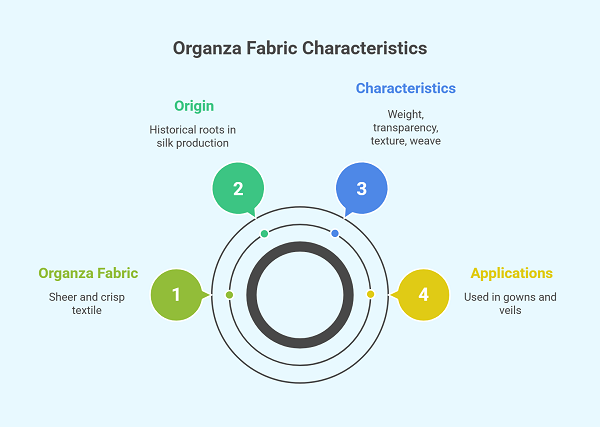
Interestingly, the word “organza” likely stems from “Organzine,” a French term for tightly twisted silk threads. That twisted yarn? It’s what gives organza that body and crispness.
Core Characteristics
- Weight: Between 20–40 grams per square meter (GSM)
- Transparency: Highly sheer
- Texture: Crisp, stiff
- Weave type: Plain weave with low thread count
- Breathability: High due to loose weave
Despite its feather-like appearance, organza has bite. It holds shapes, layers like a dream, and reflects light beautifully — hence its popularity in ball gowns and bridal veils.
Types of Organza Fabric
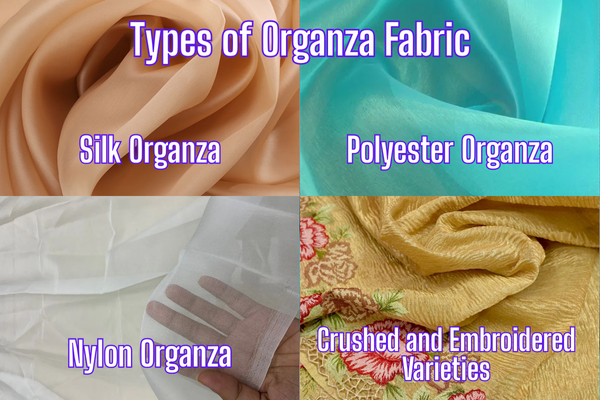
Silk Organza
The OG — expensive, luxurious, and finicky. This version can cost up to $50 per yard. It’s breathable, biodegradable, and has a soft, ethereal shimmer.
Polyester Organza
A budget-friendly twin of silk organza. It’s stiffer, slightly shinier, and far easier to care for. It’s widely used in party decorations and costumes.
Nylon Organza
Durable, crisp, and with a slightly plasticky feel. If silk is your soft-spoken artist friend, nylon is your no-nonsense bossy cousin.
Crushed and Embroidered Varieties
Designers go wild here. Crushed organza has a wrinkled texture while embroidered ones feature floral patterns, sequins, or beadwork. These are especially popular in bridalwear.
How Is Organza Fabric Made?
The Filament Yarn Weaving Process
Organza is crafted from continuous filament fibers (silk, polyester, or nylon). The yarns are twisted tightly in both warp and weft directions, increasing the stiffness.
Then comes the weaving — a plain weave done with precision. A typical organza fabric has around 20–30 threads per inch, far fewer than cotton.
Degumming and Finishing
If made of silk, the raw fabric undergoes degumming to remove sericin, a sticky protein. This reveals the clear, shimmering texture. Post-weaving, it’s often stiffened using acid or starch treatments for that signature crispness.
Uses of Organza Fabric
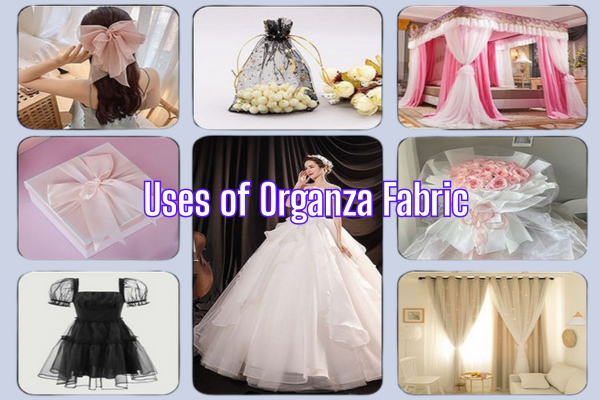
Fashion Industry
- Bridalwear: Think veils, overlays, ruffles
- Evening gowns: Structured sleeves, trains, and layers
- Accessories: Scarves, sashes, bags
Fun fact: Over 60% of bridal gowns globally use some form of organza fabric. It’s a staple in couture due to its sculptural properties.
Home Decor
Organza curtains? Yes, please. They let in light while adding elegance. Also seen in table runners, lampshades, and bed canopies.
Wedding and Event Design
Event planners love this fabric. Draped ceilings, chair sashes, backdrops — all dressed in glittery organza. It’s affordable, comes in hundreds of colors, and looks great under lights.
Pros and Cons of Organza Fabric
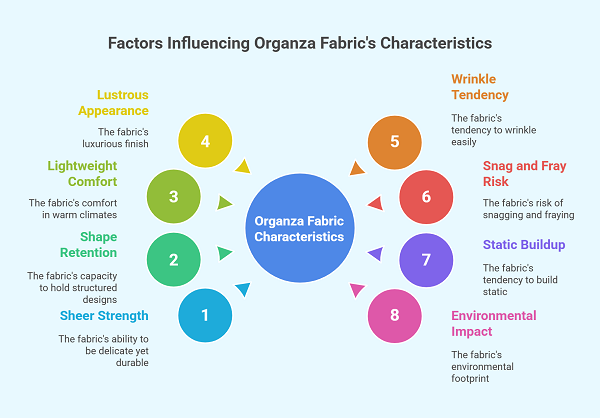
Benefits That Surprise
- Sheer Yet Strong: Combines delicacy with durability
- Shape-Retaining: Ideal for structured designs
- Lightweight: Comfortable for warm climates
- Lustrous Appearance: Luxurious finish without much effort
Weaknesses to Watch
- Wrinkles Easily: Needs pressing or steaming
- Snags and Frays: Handle with care
- Static Buildup: Especially in dry climates
- Not Eco-Friendly (in synthetics): Polyester and nylon versions don’t biodegrade
How to Care for Organza Fabric
Washing Tips
- Silk Organza: Dry clean only
- Synthetic Organza: Hand wash in cold water with mild detergent
- Avoid wringing or scrubbing. Instead, blot with a towel and hang it to air dry.
Storing It the Right Way
- Store flat or rolled to prevent deep creases
- Use acid-free tissue paper between folds
- Avoid direct sunlight to prevent discoloration
Want it to last longer? Keep it in a breathable cotton bag instead of plastic.
Conclusion
Organza fabric might seem delicate at first, but don’t be fooled. It’s like a ballerina — light, graceful, and surprisingly powerful. Whether you’re layering a wedding dress, framing a window, or draping a banquet hall, this fabric brings a touch of magic that no other can.
Yes, it needs a little TLC, but what doesn’t? In return, you get shimmer, structure, and elegance that never go out of style.
FAQs
1. Is organza fabric good for summer?
Yes, it’s lightweight and breathable. But it’s usually layered, so it can get warm in multiple layers.
2. Can organza be dyed?
Absolutely. Silk organza takes dye beautifully. Synthetics need specific dyes for polyester or nylon.
3. Is organza fabric itchy?
It can be slightly scratchy, especially nylon types. Silk versions are much softer.
4. How is organza different from chiffon?
Chiffon is flowy and drapes well. Organza is crisp and holds shape. Both are sheer but serve different design purposes.
5. Can I iron organza?
Yes, but use a low setting. Place a cloth between the iron and fabric to avoid burns or shine.
