
You’ve probably touched stitch bonded nonwoven fabric without even realizing it. It’s in shoes, filters, mattresses—even the lining of your car trunk. It’s a quiet hero. No glitz. No glamour. But it’s got grit.
Table of Contents
Let’s pull back the curtain and see what makes this fabric tick.
What Is Stitch Bonded Nonwoven Fabric?
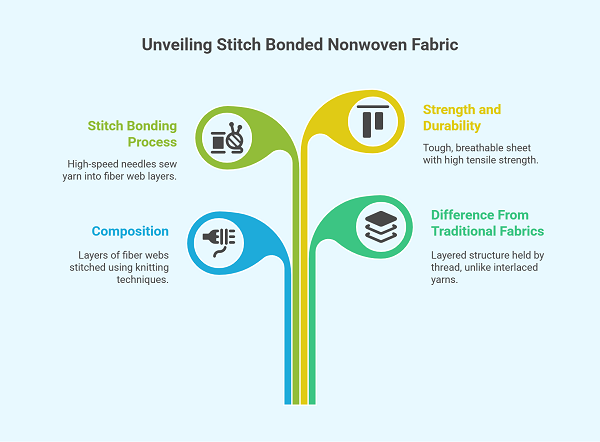
At its core, stitch bonded nonwoven fabric is made by stitching layers of fiber webs using knitting techniques—without traditional weaving or knitting.
How It’s Different From Traditional Fabrics
Think of woven fabrics like a chessboard—interlaced yarns creating order. Now imagine stitch bonded fabric as a layered cake held together by decorative icing. The “icing” here? Thread. That’s what keeps the fibers locked tight.
Stitch Bonding: The Core Concept
Stitch bonding uses high-speed needles to sew yarn into a fiber web. The result? A tough, breathable sheet that holds up under pressure—literally. Some can withstand 200+ N tensile strength. That’s not something a paper towel could dream of.
How Is Stitch Bonded Nonwoven Fabric Made?
Now this part’s juicy (if you’re into machines and fiber webs, that is).
The Basic Raw Materials
- Fibers: Polyester, viscose, polypropylene
- Yarns: Polyester, polyamide, even cotton
- Binder: Optional, depending on desired strength
Stitching Machines and Techniques
Most of it happens on Maliwatt and Malivlies machines. These machines stitch up to 1,000 stitches per minute.
Warp Knitting vs. Stitch Bonding
They’re cousins. But while warp knitting forms fabrics from yarns, stitch bonding locks loose fibers using stitching. Less yarn, more flexibility.
A Peek into the Manufacturing Process
- Lay the Web: A loose fibrous web is formed via carding or air laying.
- Stitch It: Machines drive needles through the web, stitching yarn in patterns.
- Heat Set or Finish: Depending on use, it might go through calendaring or chemical finishing.
Efficiency? Machines can pump out 5,000 meters a day on average.
Properties and Benefits
Strength and Durability
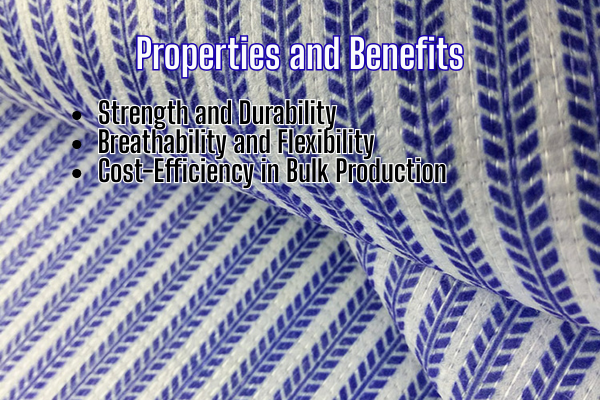
This fabric can withstand serious wear. We’re talking tensile strength ranging from 50–250 N/5cm, depending on construction.
Breathability and Flexibility
Despite its strength, it’s breathable. That’s why it’s a hit in mattresses, where ventilation matters.
Cost-Efficiency in Bulk Production
Since there’s little yarn and no weaving involved, production costs drop significantly. It’s about 30–40% cheaper than traditional woven fabrics for similar strength.
Real-World Applications
It’s not just a theory—stitch bonded fabrics work hard in the real world.
Industrial Uses
- Automotive insulation
- Filter substrates
- Construction membranes
Medical and Hygiene Products
- Surgical gowns
- Face masks
- Absorbent pads
Here, polyester-based stitch bonded fabrics rule because of their sterilizability.
Home Furnishings and Geotextiles
- Mattress linings
- Cushion backing
- Geotextile liners
Why Manufacturers Choose Stitch Bonded Fabric
Environmental Factors
Some types are fully recyclable, especially polyester-based ones. Less yarn also means less energy usage.
Performance vs. Price
In most applications, stitch bonded fabrics perform at 70–90% the strength of woven fabrics—at half the cost.
Customization Opportunities
From GSM (as low as 60 to as high as 600) to color and thickness—this fabric plays well with custom jobs.
Challenges and Limitations
Of course, no fabric is perfect.
When Not to Use It
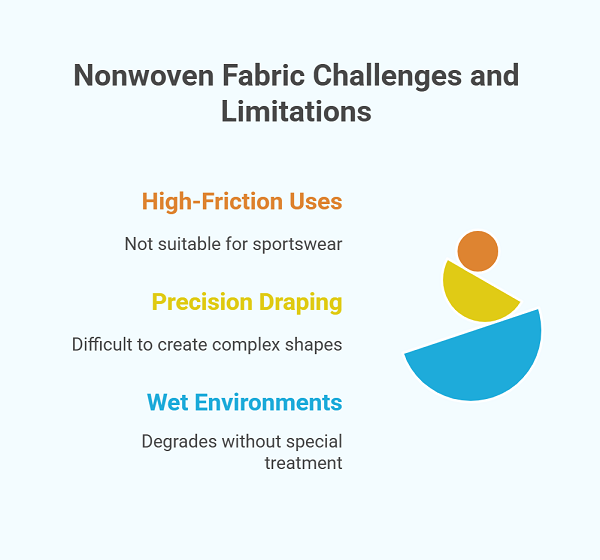
- High-friction uses like sportswear
- Precision draping
- Wet environments unless treated
Alternatives in the Market
- Spunlace: Softer but less durable
- Spunbond: Good for hygiene but weaker structurally
- Needlepunch: Thicker but not as uniform
Conclusion
Stitch bonded nonwoven fabric may not wear a crown, but it certainly holds the kingdom together. It’s strong, light, and budget-friendly. Perfect for industries that want reliability without fluff. Not ideal for fashion runways, but if you’re laying roads, stitching mattresses, or designing air filters—it’s your best friend.
Sometimes, the unsung heroes are the ones holding everything together. Quite literally.
FAQs
1. What is the difference between stitch bonded and spunbond fabrics?
Spunbond is made by spinning thermoplastic fibers and bonding them directly, while stitch bonded uses stitching yarns to lock fiber webs together.
2. Is stitch bonded fabric waterproof?
By default, no. But with laminating or coating, it can be made water-resistant.
3. Can stitch bonded fabric be recycled?
Yes, especially when made from 100% polyester or polypropylene fibers.
4. What’s the typical GSM range for stitch bonded fabric?
Anywhere from 60 to 600 GSM, depending on layers and end use.
5. Is stitch bonded fabric safe for skin contact?
Yes, especially medical-grade versions made from hypoallergenic fibers like viscose or treated polyester.
