
What Are Hang Tags?
A hang tag sits loose on a product. It attaches by a cord, ribbon, rivet, or clip. Brands place them on garments, bags, and accessories. They carry brand marks, price, care info, and QR codes. They act as a tiny billboard. They also act as a trust signal.
Functions of Hang Tags
- Brand identity. A tag shows the logo and color.
- Information. It lists size, price, or care.
- Authentication. Serial numbers and security features prove genuineness.
- Marketing. Promo codes or social links invite action.
- Experience. A well-made tag gives a luxury feel.
Practical examples
- A denim jacket with a heavy cardstock tag feels premium.
- A sports top with a QR tag links to size charts and videos.
- A kids’ toy with a plastic tag survives rough handling.
Types of Hang Tags
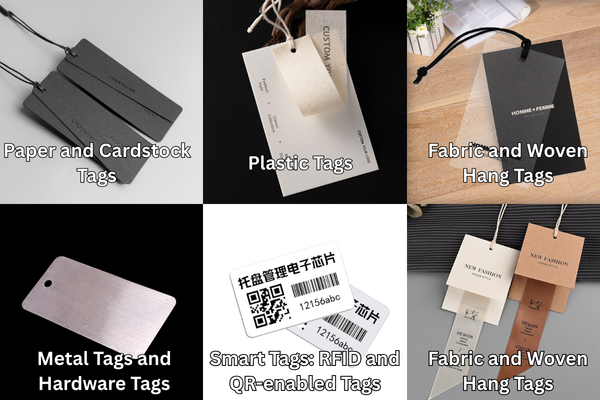
I will list six types. Short, clear, and useful.
1. Paper and Cardstock Tags (Swing Tags)
Materials, finishes, and typical uses
- Materials: Uncoated paper, recycled paper, coated cardstock.
- Finishes: Matte, gloss, spot UV, soft-touch.
- Use: Apparel, accessories, retail.
- Pros: Low cost. High print fidelity. Easy to perforate.
- Cons: Tear risk. Not water-resistant unless lamination exists.
Best for high-volume runs. Die-cut shapes add character. A small investment in spot UV can lift perceived value by a lot.
2. Plastic Tags
Advantages and common use cases
- Materials: PVC, PET, biodegradable plastics.
- Pros: Durable. Water resistant. Reusable.
- Use: Outdoor gear, swimwear, products with long shelf life.
Plastic tags last longer on shelves and in use. They suit products that go to wet or rough places.
3. Fabric and Woven Hang Tags
Best practice for garments
- Materials: Cotton twill, satin, woven labels.
- Pros: Soft feel. Seamless brand tie-in for textiles.
- Use: Premium apparel, heritage brands.
Often sewn or riveted. These tags pair well with natural-fiber garments.
4. Metal Tags and Hardware Tags
Niche and luxury applications
- Materials: Brass, aluminum, stainless steel.
- Pros: High perceived value. Durable. Distinctive.
- Use: Luxury bags, leather goods, limited editions.
Metal tags give weight. Weight signals value. The tag itself can become a collectible.
5. Smart Tags: RFID and QR-enabled Tags
Inventory and authentication roles
- RFID: Fast inventory count. Useful for 1000+ SKUs.
- QR codes: Link to product pages, care guides, videos.
- Use: Retail operations, anti-counterfeit, post-sale engagement.
A QR code converts a passive tag into a gateway. Add a short call to action. Example: “Scan for fit guide.” Small asks work best.
6. Adhesive or Tie-on Care Cards
- Materials: Waterproof paper, synthetic paper.
- Use: Items that need small instructions attached close to the product.
Design and Production Choices That Matter
A tag is small. But choices here change perception.
Size, shape, and die-cut decisions
- Standard sizes: 45×70 mm, 50×80 mm.
- Square tags feel modern. Rounded corners feel friendly.
- Custom die-cut shapes boost memorability.
Attachment methods: cord, ribbon, rivet, snap
- Cord or string keeps costs low. A rivet or metal eyelet adds durability.
- Snap or clip lets customers detach the tag easily.
Choose the attachment with the product function in mind. A swim cap needs a strong, water-safe loop.
Print, finish, and sustainability trade-offs
- Spot UV for contrast.
- Emboss for tactile logo.
- Recycled stock cuts carbon, raises brand trust among eco-conscious consumers.
A laminate solves moisture but adds cost and recycling issues. Pick what matters most.
Branding Importance
This is where the math meets emotion.
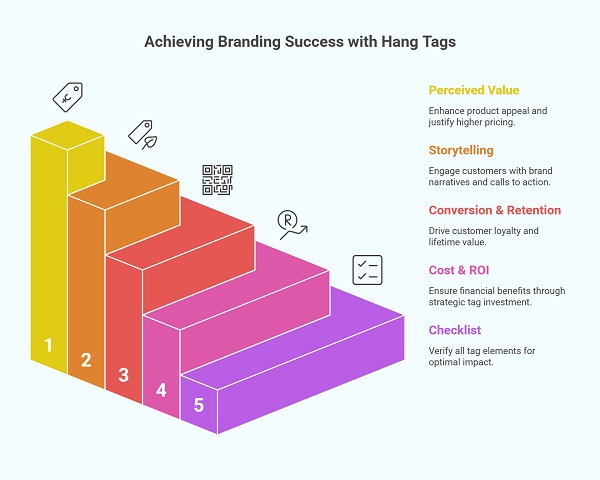
Perceived value and price premium
A well-made tag can justify a 5–20% higher shelf price. That range depends on the market segment. Luxury shoppers link tactile cues with quality. A heavy tag tells the brain: this item costs more. You then feel better about the price. Simple.
Storytelling and brand voice
Tags offer 10–30 words of prime real estate. Use the space to tell a micro-story. Write clear calls to action. Add care advice or founder notes. A short story can create an emotional tie.
Conversion, retention, and social proof
Add a hashtag. Encourage a photo share. Track scans. A QR code that links to a loyalty sign-up lifts return rates. Small actions stack into customer lifetime value.
Cost and ROI: Simple Math for Small Brands
Let us do quick numbers.
- Unit cost: Basic cardstock tag runs $0.08–$0.30 per piece at 5,000 units. Custom finishes push cost to $0.60–$1.50.
- Break-even: If a premium tag lifts price by $2 and average order sells 1.2 units, 1,000 tags can add $2,400 revenue. Subtract tag cost. Net gain often stays positive.
Numbers vary by supplier and volume. Still, test one SKU with a premium tag. Measure lift over 30 days. The result will show real ROI.
Quick Checklist Before You Order Hang Tags
- Purpose: Brand cue, care info, or inventory?
- Material: Paper, plastic, fabric, metal, or smart tag?
- Attachment: Cord, ribbon, rivet, or clip?
- Print: Full-color, spot color, foil, or emboss?
- Sustainability: Recycled stock or compostable?
- Budget: Per-unit cost and setup fees.
- Timeline: Production and shipping lead time.
Conclusion
Hang tags do small jobs with big impact. They tell a brand story. They protect against fake goods. They add perceived value. They also give a direct path to digital content. Keep tags clear. Keep them useful. Pick materials that match product life. Test one SKU. Measure sales lift. If the tags deliver value, scale up. If not, tweak copy, finish, or attachment. No brand needs a fussy tag. It needs the right tag.
FAQs
1: How long does hang tag production take?
Short answer: 7–21 business days for standard paper tags. Complex finishes or smart tags take longer.
2: Can I add QR codes to hang tags?
Yes. QR codes work well. Use short landing pages. Track scans to measure engagement.
3: Are custom hang tags expensive?
Custom tags have setup fees. Per-unit cost falls with volume. Order quantity matters.
4: Which hang tag material is best for swimwear?
Plastic or laminated synthetic paper. These resist moisture and last on wet products.
5: Do hang tags harm the environment?
They can. Choose recycled paper or compostable options. Avoid excess plastic. A small tag can align with a green brand when chosen wisely.
