
What Is Gauze Fabric, Really?
Gauze fabric is that whisper-light, barely-there material you’ve seen wrapped around wounds or floating in summer dresses. But don’t be fooled—this fabric is tougher than it looks.
Made from open-weave cotton, silk, viscose, or synthetic fibers, gauze fabric is breathable, soft, and absorbent. It’s known for its airy texture and loose structure. The threads are woven with minimal tension, which gives gauze its see-through quality and flexibility.
Table of Contents
Want numbers? Medical gauze typically has 12 to 20 threads per inch, while fashion gauze can go up to 30+. The lighter the thread count, the breezier it feels.
The Origin Story – From Egypt to Everywhere
Let’s rewind. The name “gauze” is believed to come from Gaza, a city in Palestine known for fine weaving during the Middle Ages. Originally made from silk, gauze fabric traveled from ancient looms to modern runways and hospital cabinets.
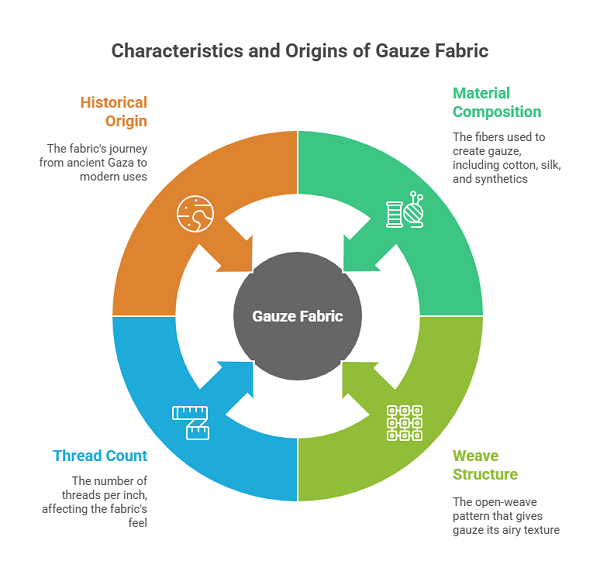
Think of gauze fabric as the world traveler of textiles—it has journeyed across cultures, centuries, and continents.
Types of Gauze Fabric
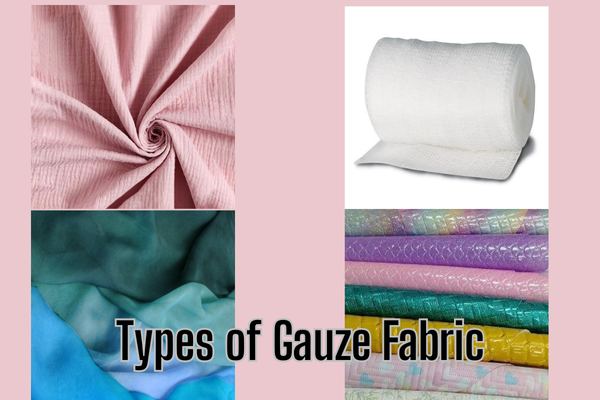
Cotton Gauze
Cotton gauze is soft, natural, and breathable. It’s often used for baby swaddles, scarves, and breezy summer tops. You’ve probably touched it without knowing—it feels like a cloud.
- Double gauze: Two layers tacked together, giving more structure.
- Triple gauze: Yep, three layers—great for warmth without weight.
Medical Gauze
Not all heroes wear capes. Some come in sterile packs. Medical gauze fabric is designed to absorb blood and protect wounds.
- Woven gauze: Durable, reusable, with higher thread counts.
- Non-woven gauze: Cheap, disposable, used in hospitals.
Silk Gauze
Luxurious and often used in embroidery or haute couture. It’s fragile but elegant, like the fashion world’s equivalent of a champagne glass.
Synthetic Gauze
Often made from polyester or rayon. Used in filtration, dress linings, or even stage props. Cheap, durable, and machine-friendly.
Properties That Make Gauze Fabric Unique
Lightweight and Breathable
Gauze fabric allows air to pass through easily. That’s why it’s perfect for baby clothes, curtains, and hot climates.
Absorbent and Soft
It can absorb 3 to 4 times its weight in liquid. Ideal for wound dressing, but also great in kitchen towels or bath wraps.
Wrinkles Easily, But That’s Its Charm
Honestly, gauze doesn’t try to be crisp. It wrinkles. A lot. But those wrinkles give it texture and personality.
Uses of Gauze Fabric in Real Life
Medical Applications
This is where gauze fabric really shines.
- Wound care: Bandages, dressings
- Surgery: Sponges, swabs
- Dental care: Post-procedure absorption
Hospitals consume millions of yards each year. A 2022 report showed that the global medical gauze market is expected to hit $4.1 billion by 2026. That’s a lot of wounds.
Fashion and Apparel
Designers love it for:
- Layered skirts
- Boho tops
- Beach cover-ups
Because of its flowy nature, gauze fabric brings a romantic vibe. Add a belt, and suddenly it’s Pinterest-worthy.
Home Textiles
Need something soft and stylish?
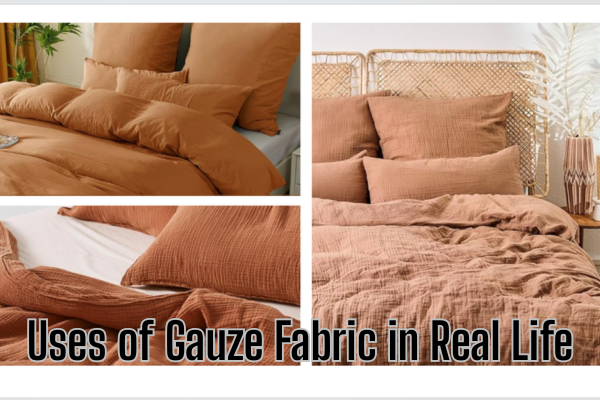
- Curtains that dance in the breeze
- Breathable crib sheets
- Table runners with a handmade touch
Industrial Uses
Gauze fabric is also used in filtration systems, theatrical scenery, and even aerospace prototypes. Surprised? Same here.
Caring for Gauze Fabric
Washing Tips
- Cold water, always.
- Gentle cycle or hand wash.
- Use mild detergent.
Drying Dos and Don’ts
- Air-drying is best.
- Avoid tumble dryers—unless you love shrinkage.
Ironing or Not?
Don’t. Gauze fabric looks better with a little crinkle. Embrace the imperfections.
Pros and Cons of Gauze Fabric
Pros
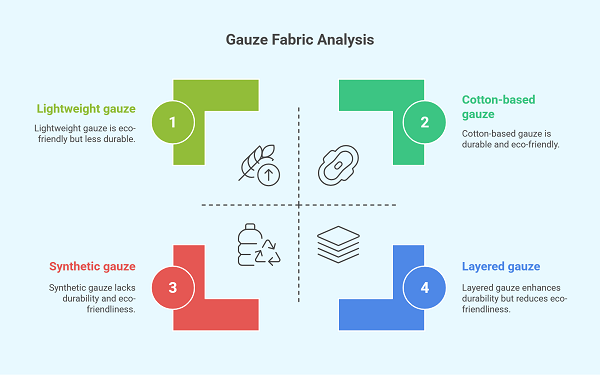
- Lightweight
- Absorbent
- Breathable
- Soft on the skin
- Eco-friendly (if cotton-based)
Cons
- Wrinkles easily
- Can shrink
- Low durability if not layered
Gauze Fabric in Numbers
Here’s what the data says:
- Thread Count Range: 12–30 threads/inch
- Water Absorption: Up to 4x its weight
- Shrinkage Rate: Up to 10% post-wash
- Market Demand (Medical): $4.1B forecast by 2026
- Fashion Growth: 8.3% CAGR (double gauze sector)
Conclusion – Not Just a Bandage
Let’s face it—gauze fabric might not get a red carpet moment, but it’s the unsung hero of textiles. Whether you’re swaddling a newborn, dressing a wound, or flowing through a summer breeze, gauze has your back.
It’s not fancy. It’s not flashy. But it’s real. And sometimes, real is all you need.
FAQs About Gauze Fabric
1. Is gauze fabric eco-friendly?
Yes, especially when made from organic cotton. It’s biodegradable and breathable.
2. Can gauze fabric be used for quilting?
Absolutely. Double or triple gauze makes soft and fluffy quilts.
3. How do I stop gauze fabric from shrinking?
Pre-wash before sewing and avoid hot dryers.
4. Is gauze fabric suitable for babies?
Definitely. It’s hypoallergenic, soft, and breathable—perfect for delicate skin.
5. What’s the difference between gauze and cheesecloth?
Both are loosely woven, but cheesecloth is coarser and mainly used in cooking or straining. Gauze is softer and wearable.
