
What Is Net Fabric?
Let’s not pretend it’s complicated—it’s not. Net fabric is exactly what it sounds like: a fabric that looks like a net. It’s a textile with open spaces between yarns, forming a grid-like pattern. These gaps? They’re the charm.
Table of Contents
Unlike solid weaves, net fabric allows air to flow. It can be whisper-thin or structured, sheer or stiff. Versatile? Absolutely.
A Brief History of Net Fabric
From Fishnets to Fashion
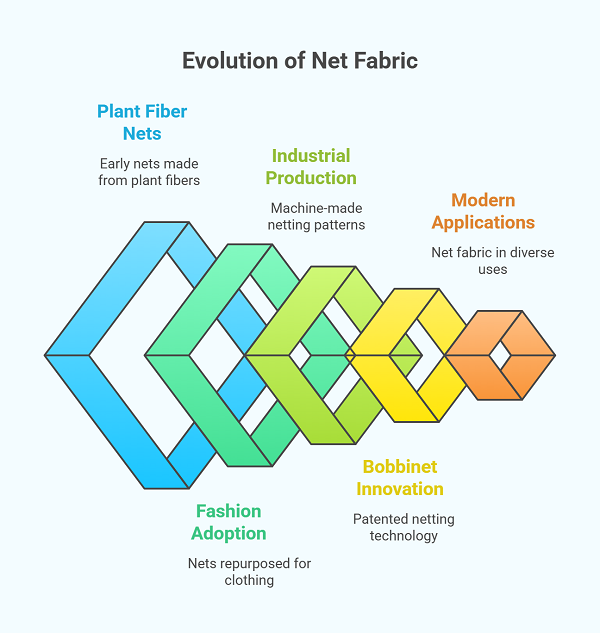
Back in the day, netting had a simple job: catch fish. Coastal communities twisted plant fibers into nets to survive. But somewhere along the line, someone said, “Hey, this could make a cute dress.”
Evolution in the Textile Industry
By the 1800s, machines could replicate netting patterns. Bobbinet, patented in 1808, transformed the game. Fast-forward to now—net fabric finds its way into everything from bridal veils to boxing rings.
Characteristics of Net Fabric
Physical Properties
Weight & Structure
Net fabric usually weighs between 10–40 GSM. That’s grams per square meter. Ultra-light, right? It can range from delicate tulle to thick nylon mesh used in sports gear.
Transparency Levels
Net fabric doesn’t hide much. Transparency depends on weave and fiber. Tighter mesh offers modesty, while open weaves… not so much.
Common Fiber Types Used
- Nylon: Durable and stretchy.
- Polyester: Cheap, resilient.
- Cotton: Softer, eco-friendlier.
- Silk: Fancy and rare.
Synthetic net fabrics dominate the market due to affordability and strength.
Types of Net Fabric
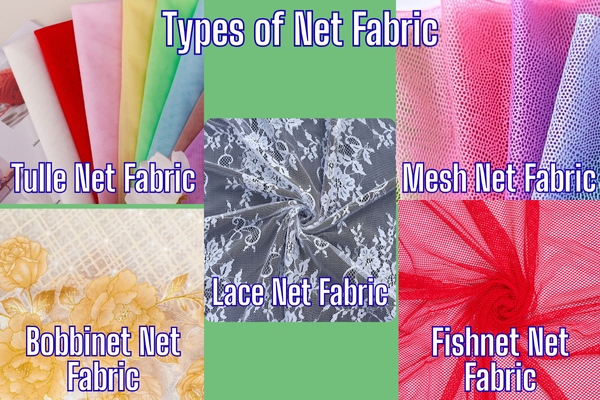
Tulle Net Fabric
Think ballerinas and bridal gowns. Tulle is soft, sheer, and elegant. Available in nylon, silk, and polyester.
Mesh Net Fabric
This one’s sportier. Mesh is used in jerseys, sportswear, and sneakers. Large holes = more breathability.
Bobbinet
The OG. Made with hexagonal mesh. Delicate yet structured. High-end applications love this stuff.
Fishnet
Bold, edgy, and not just for fashion rebels. Fishnet shows up in tights, gloves, and even performance wear.
Lace Net Fabric
Where romance meets texture, lace uses net as a base, embroidered with florals and motifs.
Applications of Net Fabric
In the Fashion Industry
Dresses, Skirts, and Lingerie
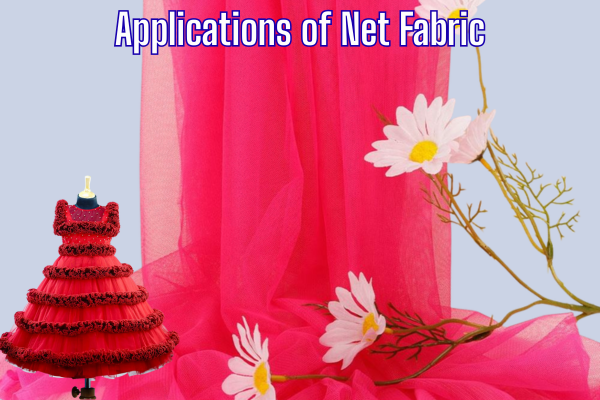
Designers go wild with net fabric. From peek-a-boo panels to full gowns, it creates visual drama. Lingerie brands especially adore it for its allure. In fact, over 68% of lingerie styles in 2024 featured some net element.
In Home Décor
Curtains, Canopies, and Covers
Light filters beautifully through net curtains. It creates privacy without blocking sunshine. Perfect for canopies too—romantic, airy, and bug-resistant.
Industrial Uses
Netting for Packaging and Sports
Industrial mesh nets carry fruits, hold fishing gear, and keep athletes ventilated. The global market for technical net fabrics crossed $2.3 billion in 2023. Surprised? So were we.
How to Care for Net Fabric
Washing Tips
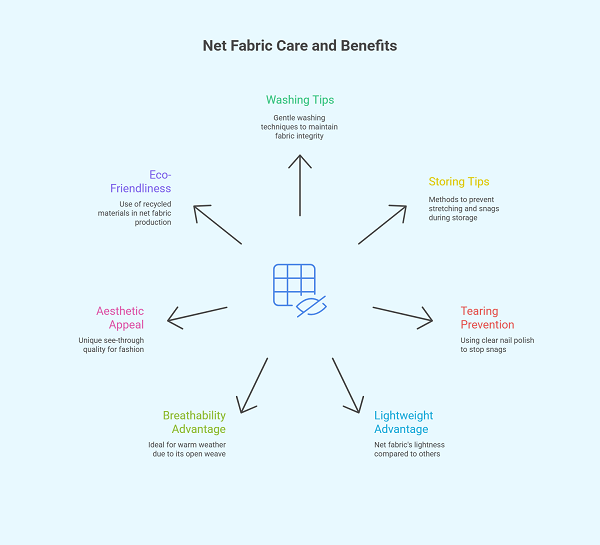
- Use cold water.
- Always hand-wash, or go on a gentle cycle.
- Avoid rough contact with zippers or Velcro.
Storing Without Damage
Fold flat or roll gently. Hanging it might stretch it out. And avoid sharp corners—it snags faster than a cat on curtains.
Avoiding Tearing
The net fabric tears easily. If a snag starts, stop it with clear nail polish. No joke—it works.
Why Choose Net Fabric?
Advantages Over Other Fabrics
- Lightweight: Net fabric weighs less than half the average woven fabric.
- Breathable: Great for warm weather.
- Aesthetic: That see-through vibe is hard to replicate.
Eco-Friendliness and Recyclability
Cotton and polyester net fabrics are increasingly being made with recycled yarns. Some brands now offer 100% recycled tulle, cutting waste and carbon emissions.
Conclusion
Net fabric isn’t just a textile—it’s a statement. Whether it flirts on a runway or filters light in a living room, it brings texture and transparency in one clever weave. Light, breathable, and full of personality, net fabric proves you don’t need to be dense to make an impact.
Want drama? Go for tulle. Want a function? Try mesh. Either way, this fabric keeps things open—literally.
FAQs
1. Is net fabric suitable for summer clothing?
Yes! It’s lightweight and breathable, making it perfect for hot, humid weather.
2. Can I dye net fabric at home?
Absolutely. Just make sure to use dye suitable for the fiber—nylon dyes differently from cotton.
3. What’s the difference between tulle and mesh?
Tulle is finer and softer, and is often used in fashion. Mesh is coarser and typically seen in sportswear.
4. Is the net fabric sustainable?
Some types are. Look for recycled or organic fiber options to make a greener choice.
5. Why does net fabric tear so easily?
The open weave leaves it vulnerable. Snags spread fast, so handle gently and store smart.
