
You ever wonder what’s inside your baby wipes, napkins, or feminine hygiene products? It’s not magic—though it might as well be. Welcome to the world of air laid nonwoven fabric, where science meets softness and efficiency. Let’s unravel this quietly powerful textile tech that hides in plain sight.
Table of Contents
What Is Air Laid Nonwoven Fabric?
The Basics
Air laid nonwoven is a fibrous web made without weaving or knitting. Unlike traditional fabrics, it’s created by dispersing short fibers (usually pulp-based) through air, which then bond via pressure or chemical binders. Think of it as crafting a fabric from mist—except it’s fibers, not water.
- No weaving
- No knitting
- Just… air magic and engineering.
How It’s Made
This isn’t your grandma’s fabric. Air laid technology uses air streams to arrange fibers randomly into a web. The result? A soft, bulky, and ultra-absorbent sheet.
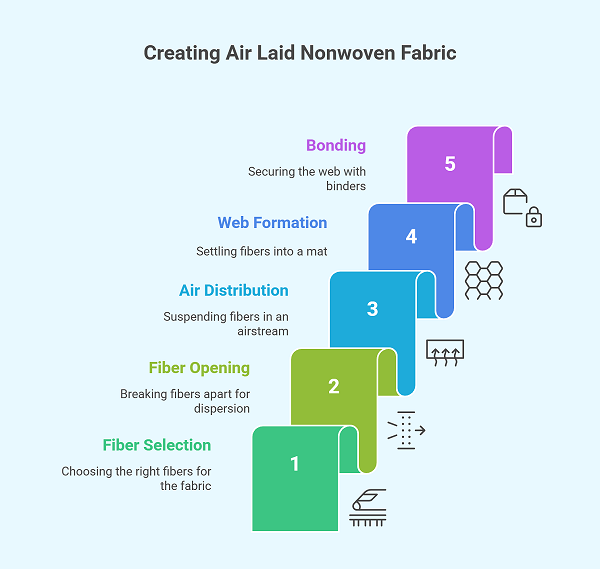
The Air Laying Process Explained Simply
- Fiber Selection – Usually cellulose, synthetic pulp, or polyester.
- Fiber Opening – Fibers are broken apart for dispersion.
- Air Distribution – Fibers are suspended in an airstream and laid down into a web.
- Web Formation – Fibers settle into a mat via suction or airflow.
- Bonding – Using latex, heat, or pressure to secure the web.
It’s like shaking snowflakes in a snow globe and watching them fall into a perfect soft layer—except now it wipes your kitchen counter.
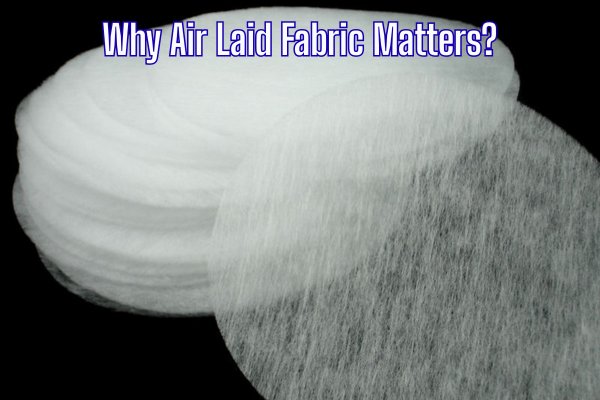
Why Air Laid Fabric Matters
Key Features at a Glance
- Absorbency: Can absorb up to 10x its weight in liquids.
- Softness: Perfect for products in direct contact with skin.
- Bulk without Weight: High volume with low weight density.
- Laminability: Bonds well with films or other layers.
- Dust-free: Unlike tissue or paper, no flaking.
These aren’t just fancy stats. They’re why brands quietly depend on air laid fabric every day.
Surprising Statistics You Didn’t Expect
- Global air laid market size: USD 3.8 billion (2024)
- CAGR: Expected to grow 5.2% annually through 2030
- Hygiene segment: Holds ~62% of global consumption
- Feminine care and wipes: Account for 70%+ of applications
That’s not small change. It’s a billion-dollar material… that nobody talks about at parties.
Real-World Applications of Air Laid Nonwoven
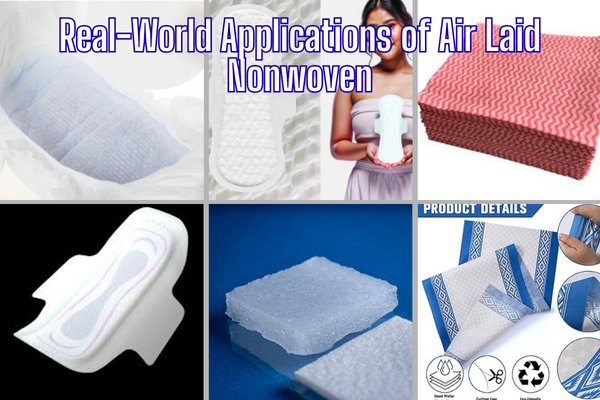
Hygiene Products
- Baby diapers
- Sanitary napkins
- Adult incontinence pads
Absorbent core? Often air laid. Your baby’s comfort owes a thank-you to this tech.
Industrial Use Cases
- Oil absorbents in spill management
- Filtration layers in HVAC systems
- Food pads in meat packaging (you know that weird pad under your chicken? Yep, that’s it.)
Household Items You Didn’t Know Used It
- Napkins
- Kitchen wipes
- Tabletop mats
Odds are, your home is already full of it. You just didn’t know its name.
Air Laid vs. Other Nonwoven Technologies
Compared to Spunbond and Spunlace
| Feature | Air Laid | Spunbond | Spunlace |
| Absorbency | High | Low | Medium |
| Bulkiness | High | Medium | Low |
| Strength | Moderate | High | High |
| Cost | Medium–High | Low | High |
| Softness | Very Soft | Medium | Soft |
Where It Wins and Where It Doesn’t
- Wins in softness and absorbency
- Loses in strength and stretch
- Costs more than spunbond, less than spunlace
If spunbond is the bouncer, air laid is the gentle caretaker.
Challenges and Sustainability
The Eco Talk: Is It Green Enough?
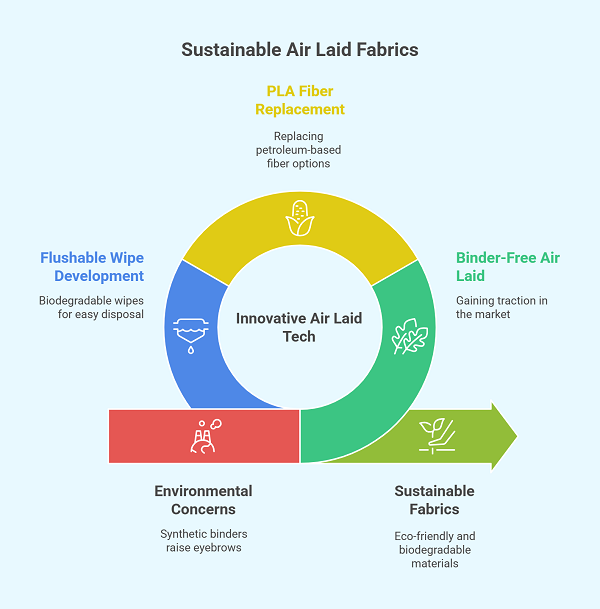
Air laid fabrics are often biodegradable when made from pulp or cellulose. But the use of synthetic binders raises eyebrows.
Pros:
- Compostable options exist.
- Lower water use compared to traditional textile production.
Cons:
- Petroleum-based binders are still common.
- Not always recyclable due to layered composites.
It’s like making a great salad—then adding ranch dressing from a mystery bottle.
Current Innovations in Air Laid Tech
- Binder-free air laid now gaining traction.
- PLA fibers replacing petroleum-based options.
- Development of flushable wipes from biodegradable air laid.
Innovation is breathing fresh air (pun intended) into this space.
Final Thoughts: Light as Air, Strong as Ever
Air laid nonwoven fabric might not get the spotlight, but it does the heavy lifting. From absorbing spills to keeping us clean and comfortable, it’s a quiet hero. It’s soft, efficient, and packed with potential.
And next time you reach for a napkin or diaper, you’ll know—there’s a little bit of air-engineering genius at work.
FAQs About Air Laid Nonwoven Fabric
1. What is air laid nonwoven fabric used for?
Mainly for hygiene products like diapers, sanitary pads, wipes, and industrial absorbents like oil spill pads.
2. Is air laid fabric eco-friendly?
If made from natural fibers like cellulose or pulp, yes. But synthetic binders can reduce its environmental friendliness.
3. How does air laid fabric compare to spunlace?
Air laid is bulkier and more absorbent. Spunlace is stronger and more suitable for wet wipes and cleaning cloths.
4. Can I recycle air laid fabric?
Not always. Many products are layered with films or contain binders, which make recycling difficult.
5. What’s the future of air laid fabric?
Sustainable alternatives like PLA fibers and binder-free options are the future, aiming for biodegradable and compostable air laid solutions.
