
If you’ve ever looked at a blazer and thought, “Wow, that’s got class,” chances are you were staring at herringbone. But don’t let that fancy zigzag pattern fool you—it’s not just for your grandpa’s coat or a hipster’s flat cap. Herringbone weave fabric is much more than just good looks. Let’s unravel the story behind the weave that zigzags through both history and high fashion.
Table of Contents
What Is Herringbone Weave Fabric?
The Zigzag that Changed the Game
Herringbone is a type of broken twill weave that forms a distinctive V-shaped pattern. Think of it like a chevron, but with a subtle twist—the lines don’t just mirror each other; they flip at precise intervals. It resembles the skeleton of a herring fish, which, as odd as it sounds, is where the name comes from.
And no, it’s not just decorative. That tiny tweak in the weave structure adds a surprising amount of strength and character.
Historical Origins and Purpose
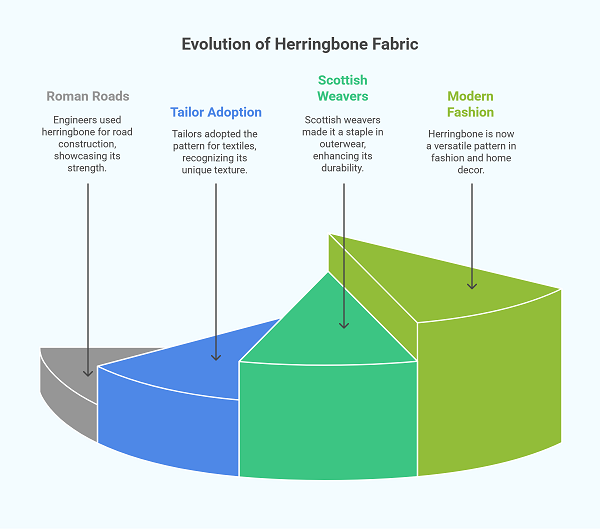
Herringbone goes way back—like Roman Empire back. Engineers used it in road construction, and later, tailors adopted the same pattern in textiles. By the 1800s, Irish and Scottish weavers had made it a staple of outerwear. Fast forward, and it’s now everywhere from runways to rustic sofas.
How Herringbone Weave Fabric Is Made
The Anatomy of the Weave
Herringbone is made using a reversed twill weave. In regular twill, the diagonal pattern runs in one direction. But here’s the twist—literally. Every few rows, the diagonal flips direction, creating a broken, stepped zigzag.
This isn’t just a design choice. That break in continuity makes the fabric more stable and less prone to distortion compared to plain twills.
Common Fibers Used in Herringbone
Wool
Wool and herringbone are a match made in textile heaven. Why? Because wool holds structure like a pro. Over 68% of herringbone suiting fabrics are made of wool, especially for colder climates. It insulates without suffocating, and let’s face it—wool makes that zigzag look sharp.
Cotton and Blends
If you want something more breathable, cotton steps in. Cotton herringbone shirts are popular in both casual and formal settings. You’ll also find blends with polyester or viscose to reduce cost, increase wrinkle resistance, or improve drape.
Key Characteristics of Herringbone Weave Fabric
Visual Appeal
Let’s be honest—this pattern catches the eye. It adds texture and depth without overwhelming. That makes it perfect for minimalist styles with a twist.
Durability and Structure
Due to the reversed twill technique, herringbone is tightly woven and less prone to stretching. It holds shape beautifully and resists puckering.
Statistically, herringbone fabrics last 20–30% longer than plain weave counterparts in abrasion tests.
Breathability and Comfort
If woven in natural fibers like wool or cotton, herringbone fabric remains breathable. It regulates temperature better than synthetic weaves and feels soft to the touch—especially after a few washes.
Where Herringbone Shines: Uses and Applications
Men’s and Women’s Fashion
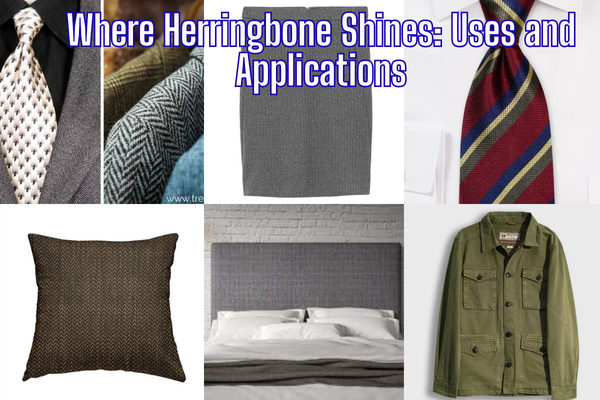
You’ll spot herringbone in suits, jackets, skirts, and even ties. It’s not loud like pinstripes or bold checks. Instead, it whispers “elegance.” In menswear, herringbone suits made up 22% of patterned suit sales in 2023. That’s not a trend—that’s trust.
Interior Design and Upholstery
From throw pillows to headboards, herringbone adds a tailored texture. Designers love it for sofas because it hides dirt while still looking polished.
Workwear and Tailoring
Because of its durability, herringbone weave has also been used in military jackets and overalls. It can take a beating and still look good doing it.
Pros and Cons of Herringbone Weave
Why Choose It?
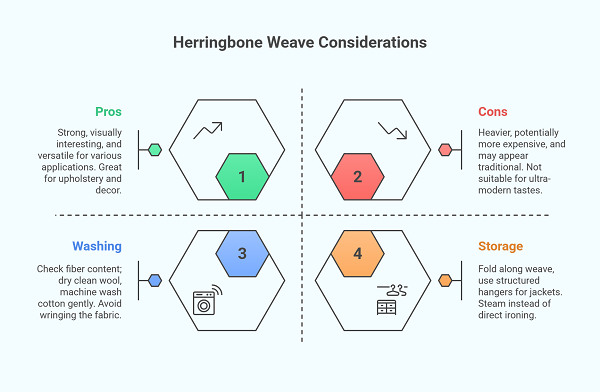
- Strong and stable weave
- Visually interesting yet subtle
- Works in both formal and casual wear
- Great for upholstery and decor
- Long-lasting, especially in wool
When to Skip It
- Slightly heavier than plain weaves
- Can be pricier due to weave complexity
- Might look too traditional for ultra-modern tastes
Caring for Herringbone Fabric
Washing Tips
Always check the fiber content. Wool herringbone? Dry clean it. Cotton? Machine wash cold, gentle cycle. Avoid wringing it out—it’s not a dishrag.
Storage and Maintenance
Fold along the weave to prevent creases. For jackets, use structured hangers. And yes, give it a little steam instead of ironing directly.
Final Thoughts: Is Herringbone Worth It?
Absolutely. Whether you’re dressing for an interview, updating your living room, or just trying not to look like everyone else at brunch—herringbone gives you style and substance. It’s the fabric version of a confident handshake: firm, classic, and a little unexpected.
FAQs
1. What is the difference between herringbone and chevron patterns?
Chevron is a continuous zigzag with pointed angles, while herringbone has a broken zigzag, creating a staggered effect.
2. Is herringbone fabric suitable for summer clothing?
Yes, if made from lightweight cotton or linen blends. Just avoid wool in the summer unless you enjoy personal saunas.
3. How can I identify a true herringbone weave?
Look for the distinctive V-shaped zigzag where the diagonal lines reverse direction every few rows.
4. Is herringbone weave fabric wrinkle-resistant?
In wool or blended forms, yes. Cotton herringbone wrinkles like any cotton—but nothing a steam iron can’t fix.
5. Can herringbone weave be used in sustainable fashion?
Definitely. Use organic cotton or recycled wool. The strong weave extends garment life, reducing waste over time.
