
What is Lyocell Fabric?
Lyocell fabric is a modern textile that comes from nature but feels like a futuristic luxury. It’s made from wood pulp—usually eucalyptus, beech, or spruce—and it’s loved for being both soft on the skin and easy on the planet.
Table of Contents
If you’ve ever worn something that feels cooler than cotton, smoother than silk, and stronger than rayon, chances are it was Lyocell. This isn’t just any fiber. It’s a game-changer in the world of sustainable fashion.
The Origins and Making of Lyocell
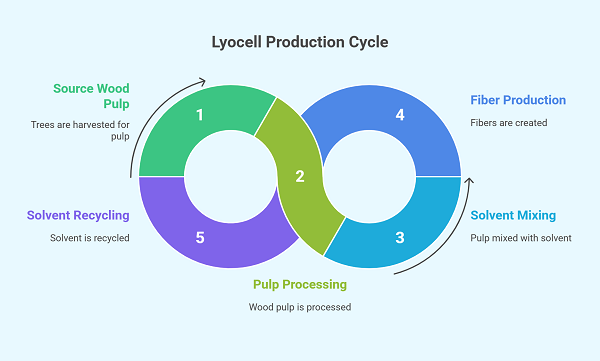
From Wood to Wardrobe: The Raw Materials
Lyocell begins its life as raw wood. That’s right—trees. Eucalyptus, oak, and birch are the usual stars here. The beauty? These trees grow fast, require little water, and need no nasty pesticides.
To put it in numbers, Lyocell production uses about 50% less water than traditional cotton. That’s not just efficient. That’s responsible.
The Closed-Loop Production Process
Here’s the magic trick. The wood gets pulped, then mixed with a non-toxic solvent called N-methylmorpholine N-oxide (try saying that three times fast). What’s special is the closed-loop process. It recycles over 99% of the solvent—which means little waste, less pollution, and a pat on the back from Mother Nature.
How Lyocell Differs from Rayon and Modal
They’re all part of the same family—regenerated cellulose fibers—but Lyocell plays by cleaner rules. Rayon often uses harmful chemicals like carbon disulfide, while Modal doesn’t match Lyocell’s eco-efficiency. If fabrics were siblings, Lyocell would be the responsible older one who recycles and composts.
Key Features of Lyocell Fabric
Softness and Comfort That Surprises
The first thing you’ll notice when you touch Lyocell? That silky smooth surface. It feels like luxury, but without the price tag (or the animal rights baggage of silk). Its fiber structure has a smooth cross-section, making it gentle on sensitive skin.
Strength, Breathability, and Moisture Management
Despite being soft, Lyocell is no pushover. It’s 50% more absorbent than cotton, which means it keeps you cool, dry, and odor-free. That’s why it’s a favorite for activewear and underwear.
And it’s strong—especially when wet. Unlike some other fabrics that wilt when washed, Lyocell holds its shape and strength, making it ideal for daily wear.
Biodegradable and Eco-Friendly Aspects
Lyocell breaks down naturally. Leave it in compost, and it starts decomposing within 6 to 8 weeks. That’s faster than your average t-shirt’s time in a landfill (which, fun fact, can be up to 200 years). Sustainability isn’t a buzzword here—it’s the blueprint.
Common Uses of Lyocell Fabric
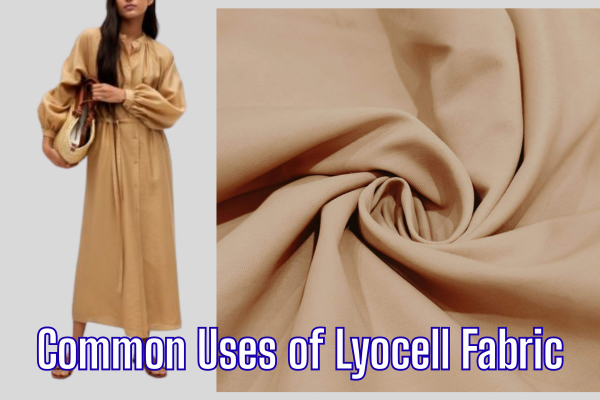
Fashion Industry Favorites
From flowing dresses to crisp shirts, Lyocell shows up in styles that need drape, softness, and a breathable touch. Major brands are now using it in their sustainable lines.
You’ll often see it blended with cotton, wool, or polyester to combine durability with comfort.
Home Textiles and Beyond
Lyocell sheets? Absolute cloud-level comfort. Because of its moisture-wicking abilities, Lyocell bedding keeps sleepers cool at night. Expect it in:
- Bed linens
- Pillowcases
- Towels
- Mattress covers
Medical and Industrial Applications
Lyocell is even being used in wound dressings and hygiene products, thanks to its high absorbency and softness. Engineers like it for filters and specialty paper as well.
Pros and Cons of Lyocell Fabric
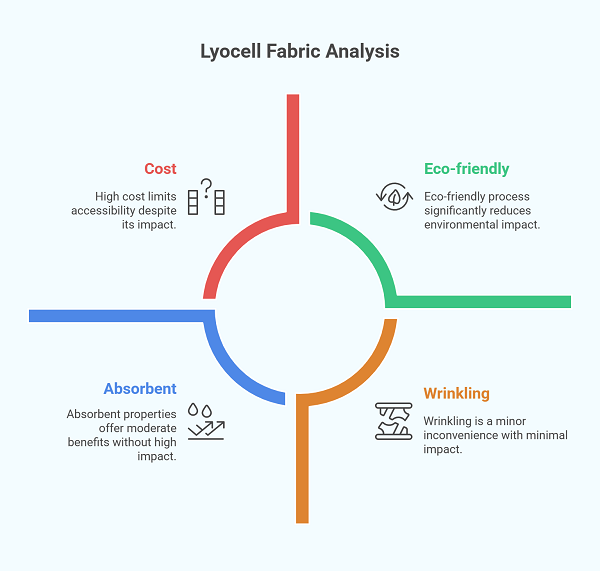
Advantages That Make It Stand Out
- Eco-friendly: Closed-loop process, biodegradable
- Absorbent: 50% better than cotton
- Hypoallergenic: Great for sensitive skin
- Strong: Holds up to repeated washes
- Versatile: Used in fashion, home, medical industries
Limitations to Keep in Mind
- Cost: Typically 20–30% more expensive than cotton
- Wrinkling: Prone to light creasing
- Care Sensitivity: High heat can damage it
Care Tips for Lyocell Clothing
Washing Do’s and Don’ts
Use cold water. Choose a gentle detergent. Avoid bleach like it’s the plague. Handwashing is great, but machine on delicate mode also works.
Drying and Ironing Advice
Air-dry flat if you can. Tumble-drying is okay—low heat only. For wrinkles, a warm iron will do. But skip the steam. It doesn’t need the drama.
Is Lyocell Fabric Worth It? A Final Thought
If you want softness, durability, and sustainability in one fabric, Lyocell is the trifecta. It checks every box—comfort, conscience, and cost-efficiency (long-term). Sure, it may cost a bit more upfront, but its benefits wear well over time.
We often throw money at fast fashion, only to toss the item months later. Lyocell? That’s a keeper. Think of it as your wardrobe’s unsung hero—quietly high-performing, subtly stylish, and planet-approved.
FAQs About Lyocell Fabric
1. Is Lyocell better than cotton?
Yes, in many ways. It’s softer, more absorbent, and uses less water and chemicals during production.
2. Can Lyocell be machine-washed?
Absolutely. Just use cold water and a gentle cycle. Avoid high heat when drying.
3. Does Lyocell shrink?
Very minimally—if washed and dried properly. Always check your care label to be safe.
4. Is Lyocell fabric eco-friendly?
Yes. It’s made using a closed-loop system, biodegradable, and uses sustainable wood sources.
5. What does Lyocell feel like?
Imagine the smoothness of silk, the strength of polyester, and the breathability of cotton—wrapped in one fabric. That’s Lyocell.
