
Imagine a fabric that looks wrinkled on purpose—and that’s actually the point. That’s seersucker fabric in a nutshell. A favorite in summer wardrobes and charming Southern suits, this fabric has more history and clever engineering than most people give it credit for. And yes, you really don’t need to iron it. Ever.
Table of Contents
Let’s unfold the wrinkles and get into why seersucker fabric is more than just a seasonal fling.
What is Seersucker Fabric?
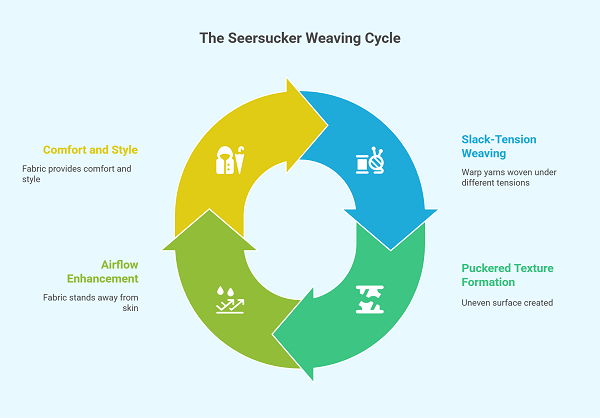
Seersucker fabric is a lightweight woven fabric with a unique puckered or crinkled surface. The texture is created by weaving some yarns at higher tension than others. This creates alternating smooth and wrinkled stripes across the fabric.
The Puckered Texture Defined
Seersucker fabric has a unique texture of alternating smooth and puckered stripes. Those puckers? They’re not flaws. They’re intentional.
The puckering comes from the weave. One set of yarns tightens while the others relax. Result? A bumpy texture that stands away from the skin, allowing for maximum airflow.
How Seersucker is Made
Manufacturers use slack-tension weaving. Warp yarns are woven under different tensions. About 50% of the yarns are tight, while the rest are loose. That causes the uneven surface.
Typical fiber content?
- 100% cotton (most common)
- 100% Polyester seersucker
- Polyester-Spandex Seersucker
- Cotton-polyester blends
- Rarely, silk or rayon for luxury options
The History Behind Seersucker
From Mughal India to Southern USA
“Seersucker” comes from the Persian words “shir-o-shakar,” meaning “milk and sugar.” Fitting, right? Smooth and rough just like the texture.
India produced the original versions during the Mughal Empire. British colonists brought it to Europe, and later it found a second life in the American South due to—you guessed it—the heat.
Popularity in Preppy and Professional Wear
By the 20th century, seersucker fabric exploded in popularity. In the 1920s, it became the unofficial fabric of Ivy League prep. Fast forward to the modern day, it’s everywhere—from Senate floor suits to beachwear.
Key Characteristics of Seersucker Fabric
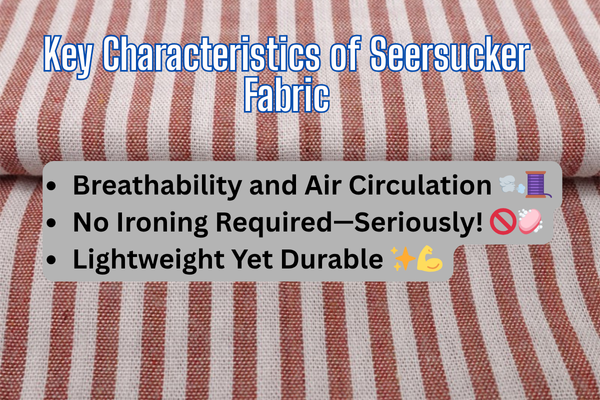
- Breathable: The puckered surface holds the fabric away from the skin, improving airflow.
- Lightweight: Ideal for warm and humid weather.
- Low maintenance: Naturally wrinkled appearance means it usually doesn’t require ironing.
- Comfortable: Reduces fabric-to-skin contact, making it cooler to wear.
Breathability and Air Circulation
The puckered sections create tiny air pockets. That’s not just good design—it’s functional. Seersucker shirts can be 30–40% cooler than traditional poplin in hot climates. That’s like having natural AC.
No Ironing Required—Seriously!
One of the best perks? You can pull it out of the laundry and wear it. The crinkled texture hides wrinkles. In fact, ironing it ruins the aesthetic. Lazy dressers, rejoice.
Lightweight Yet Durable
We’re talking 100–130 GSM typically. It’s light, yes—but don’t call it flimsy. It handles wear and tear like a champ.
Uses of Seersucker Fabric
Seersucker in Fashion
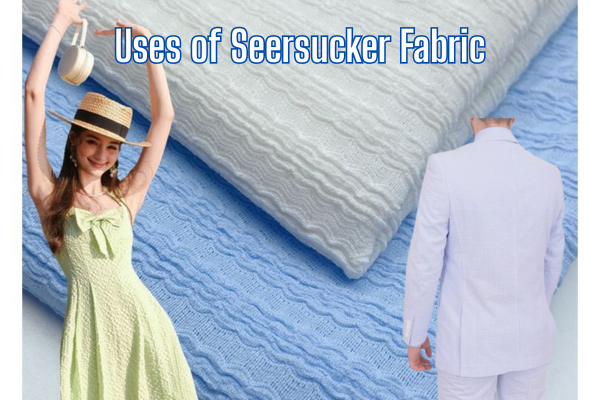
- Suits, especially for summer weddings
- Dresses and skirts with a flared silhouette
- Shirts that say, “I’ve got style and I’m cool (literally)”
- Children’s rompers (adorable and breathable)
Home Furnishing & Accessories
- Curtains that let in light but still give texture
- Cushion covers with a tactile flair
- Summer bedding—less clingy, more breezy
Medical and Industrial Applications
Fun fact: Some scrubs and lab coats use seersucker fabric blends. Why? Easy maintenance + airflow = comfort in high-pressure environments.
Pros and Cons of Seersucker Fabric
Advantages of Seersucker
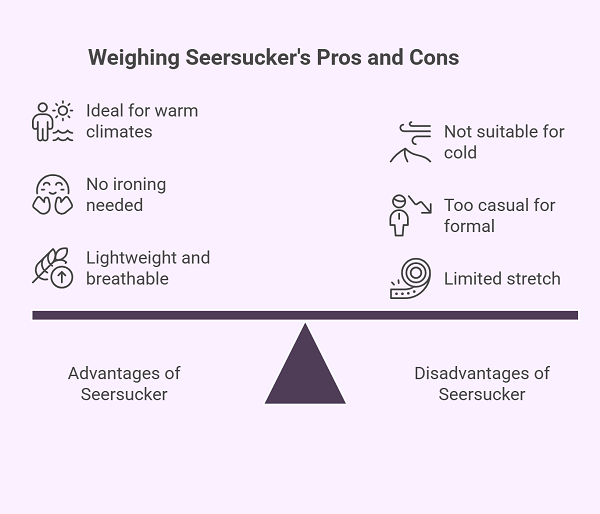
- No ironing—ever
- Perfect for warm and humid climates
- Absorbs sweat and dries fast
- Lightweight, comfortable, and breathable
- Holds color well over time
Downsides to Consider
- Not ideal for cold weather (unless you enjoy freezing)
- Can look “too casual” in some formal settings
- Limited stretch—don’t expect spandex-level give
How to Care for Seersucker Fabric
Washing Tips
- Use cold or warm water
- Gentle detergent
- Avoid bleach—unless you’re into mystery dye effects
Drying & Storing
- Tumble dry low or line dry
- Store folded, not hung (helps preserve puckers)
- Skip the iron. Seriously. Put it down.
Final Thoughts: Is Seersucker Worth It?
Absolutely. If you live anywhere where temperatures hit 80°F or higher, seersucker fabric will be your wardrobe’s MVP. It’s functional, stylish, and maintenance-free.
Sure, it might look like your shirt’s had a bad night’s sleep, but that’s the point. It wears the wrinkles like a badge of honor. Kind of like how we all feel during summer heatwaves, right?
FAQs About Seersucker Fabric
1. Is seersucker fabric only made of cotton?
Not always. While 100% cotton is most common, you’ll find blends with polyester, rayon, or even silk for a premium touch.
2. Why does seersucker fabric feel bumpy?
The puckers are created by slack-tension weaving. It’s done on purpose to promote air circulation and avoid sticking to the skin.
3. Can I wear seersucker in winter?
Technically yes, but it’s designed for summer. In winter, it won’t insulate well. Layer it up or switch to heavier fabrics.
4. Is the seersucker business appropriate?
In many places, yes. Especially in summer, seersucker suits are accepted in workplaces, though maybe not for boardroom takeovers.
5. Does seersucker shrink in the wash?
Like any cotton-based fabric, it may shrink slightly if washed in hot water. Stick to cold water and air drying for best results.
