
What Is Suede Fabric?
Suede fabric is a fluffy, velvety, fuzzy leather-textured fabric (chemically or mechanically) made of polyester or lambskin.
A suede fabric is manufactured by mechanically abrading the surface to create a “napped” or raised fibrous finish. It is achieved through a finishing process called “sueding,”. It can be done on synthetic fabrics (using microfiber polyester). 100% polyester microfiber fabric is finished to mimic the look and feel of genuine suede.
- Suede finish: Deeper abrasion + brushing → raises nap → creates a velvet-like pile.
- Peach finish: Light abrasion → removes fiber tips → creates smooth microtexture.
Definition and Origin
Suede fabric is a soft, napped leather made from the underside of animal skin, usually lamb, though goat, calf, and deer are common, too. Unlike full-grain leather, suede doesn’t have the glossy surface it feels more like velvet with a rugged edge.
Table of Contents
The word “suede” comes from the French phrase “gants de Suède,” which literally means “gloves from Sweden.” That should tell you one thing: this fabric’s been stylish for centuries.
Quick Facts About Suede Fabric
- Average thickness: 0.5–1.2 mm
- Durability index: 6/10 (vs. 9/10 for leather)
- Moisture sensitivity: High
- Breathability: Moderate
- Weight: 160–220 GSM
How Is Suede Fabric Made?
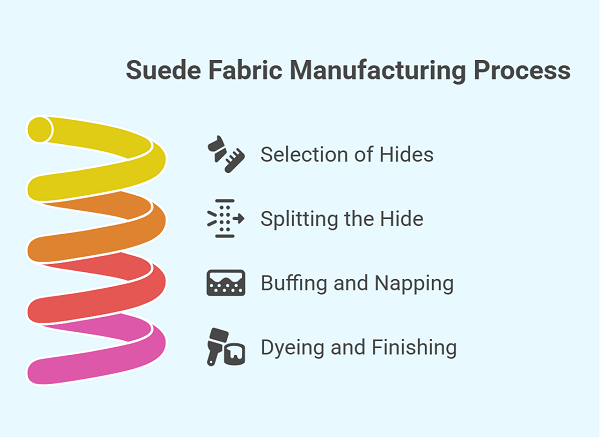
The Manufacturing Process
- Selection of hides – Usually lambskin
- Splitting the hide – Top grain separated, underside used
- Buffing and napping – To create that soft, fuzzy texture
- Dyeing and finishing – Color is added using chrome-free dyes
Chemical Treatments in Modern Suede
Nowadays, some suede is synthetic—made from polyester or microfiber and treated with polyurethane. That version looks similar but is easier to clean and costs less.
Types of Suede Fabric
Based on manufacturing, there are two types of suede fabric: woven suede and knit suede.
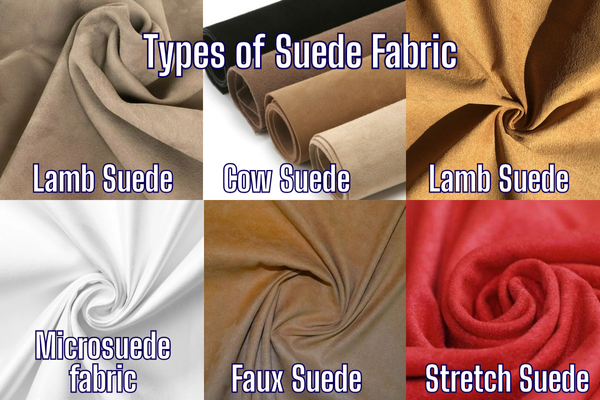
Natural Suede Variants
- Lamb Suede: Softest, but less durable
- Cow Suede: Thicker, more rugged
- Pig Suede: Has a tighter grain, easier to maintain
Synthetic Alternatives
- Microsuede: Man-made, durable, water-resistant
- Faux Suede: Often used in fashion and furniture
- Stretch Suede: Blended with spandex for flexibility
Ever tried wiping microsuede with a damp cloth? It feels like magic. Actual suede? That’s a heartbreak waiting to happen.
Common Uses of Suede Fabric

In Fashion
- Jackets and coats
- Skirts and pants
- Shoes, especially boots
- Handbags and accessories
Suede shoes in the 1960s? Elvis made them famous. Sales of suede boots jumped 200% after “Blue Suede Shoes” hit the charts. That’s the power of fabric in pop culture.
In Home Décor
- Upholstery
- Throw pillows
- Curtains
- Wall panels
Microsuede has become a go-to for modern couches. Why? It resists stains and looks plush. About 60% of suede-style furniture today uses microsuede.
Industrial and Miscellaneous
- Gloves
- Watch straps
- Car seat covers
- Tool grip enhancements
Caring for Suede Fabric
Water Is the Enemy
If suede gets wet, the texture can turn stiff. Always blot—never rub. Apply a waterproofing spray before the first wear.
Cleaning Tips
- Use a suede brush (or an old toothbrush in emergencies)
- For oil stains, sprinkle with cornstarch and let it sit
- Use white vinegar for tough spots
- Never toss suede in a washing machine
Forgot and washed a suede jacket once. It came out looking like a shriveled mushroom. Lesson learned.
Suede vs. Other Fabrics
Suede vs. Leather
| Feature | Suede | Leather |
| Feel | Soft, napped | Smooth, polished |
| Durability | Moderate | High |
| Maintenance | High | Moderate |
| Cost | Lower | Higher |
Suede vs. Velvet
| Feature | Suede | Velvet |
| Material | Leather-based | Woven |
| Texture | Napped, matte | Soft, shiny |
| Uses | Outerwear, décor | Evening wear, drapes |
Pros and Cons of Suede Fabric
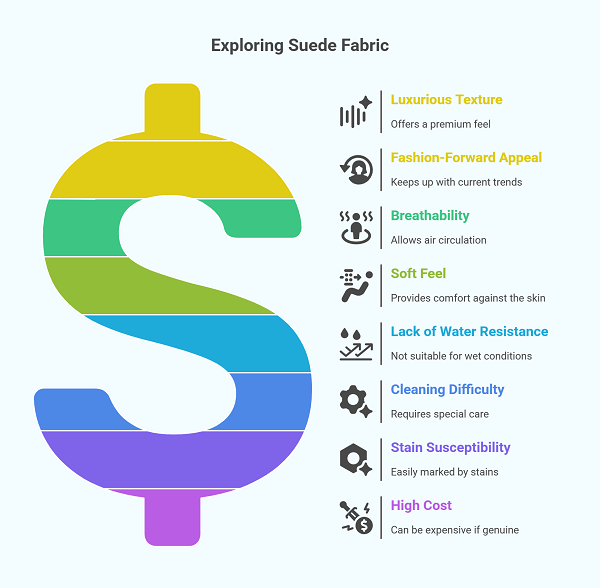
Advantages
- Luxurious texture
- Fashion-forward appeal
- Breathes better than leather
- Softer feel on the skin
Disadvantages
- Not water-resistant
- Difficult to clean
- Prone to stains
- Expensive if genuine
Interesting Facts You Didn’t Know About Suede
- NASA once used suede in early glove prototypes for astronauts.
- Over 70% of suede used in the global fashion market now comes from synthetic sources.
- Suede breathes better than leather due to its open pores—ideal for shoes.
- Elvis didn’t even own blue suede shoes when he sang about them.
- Some luxury car interiors use suede-like Alcantara for that high-end feel.
Conclusion: Is Suede Fabric Worth It?
Absolutely—if you handle it right. Suede fabric has a reputation for being high-maintenance, but with the right care, it lasts for years. Whether you go for the luxe feel of lamb suede or the practicality of microsuede, you’ll get style, comfort, and that irresistible soft touch.
It’s like having a pet that doesn’t bark but still demands attention. The reward? A classy, textured look that never feels boring.
5 Unique FAQs About Suede Fabric
Q1: Is suede fabric cruelty-free?
Not always. Genuine suede comes from animal hides. For cruelty-free options, go with faux or microsuede.
Q2: Can suede be waterproofed?
Yes, with a suede protector spray. But it won’t make it fully waterproof—just more resistant to water stains.
Q3: How do I fix crushed suede nap?
Use a soft brush or steam lightly from a distance. Don’t press directly or you might flatten the texture permanently.
Q4: Does suede stretch over time?
Yes, especially in shoes or fitted jackets. That’s why suede items often feel tight at first.
Q5: Is suede fabric breathable in hot weather?
Surprisingly, yes. Unlike leather, suede lets air pass through, making it a decent choice for spring and fall wear.
