
You’ve probably touched it and thought, “Wow, is this magic or fabric?” That’s the allure of tissue fabric, it’s light as air but looks like a million bucks. Whether you’ve seen it flowing in bridal veils or glimmering on a festive saree, its charm is hard to ignore. Let’s unfold (pun intended) the full story behind this glittery genius of the textile world.
Table of Contents
What is Tissue Fabric?
The Basics
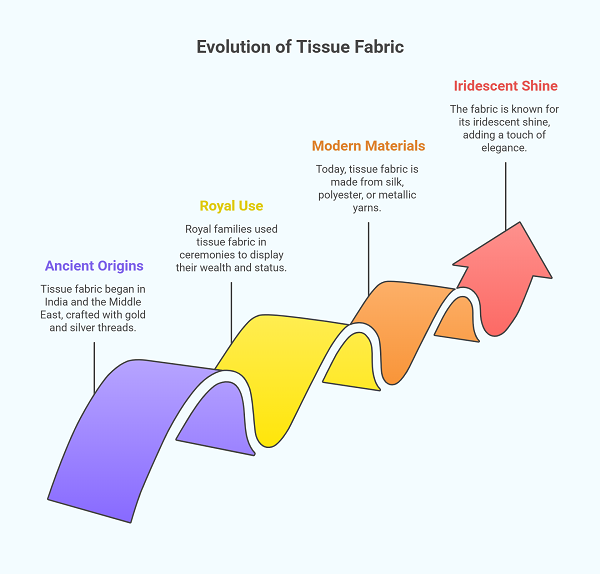
Tissue fabric is a lightweight, sheer fabric often made from silk, polyester, or metallic yarns. It’s commonly woven in plain or satin weave structures and is known for its iridescent shine. Today most of the tissue fabric is made from polyester fabric, commercially known as power mesh or 1×1 mesh fabric.
Brief History & Origin
This fabric isn’t new. Originating in India and the Middle East, tissue fabric was once crafted using gold and silver threads. Royal families wore it during ceremonies to showcase wealth and elegance.
Key Characteristics of Tissue Fabric
Lightweight Feel, Heavy Looks
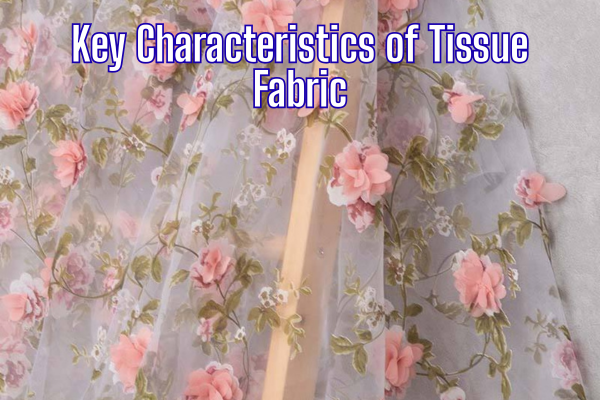
Don’t be surprised that 1 meter weighs less than 50 grams, but it can carry intricate embroidery, zari, or sequins without breaking a sweat.
Shimmer and Sheen
It’s got that runway-level glow. Thanks to metallic yarns or tightly twisted silk, tissue fabric reflects light like a mirrorball at a retro party.
Breathability & Texture
Despite being dense in appearance, it’s surprisingly breathable. The fabric has a soft, slightly stiff feel, like a cross between organza and silk.
Common Fiber Blends
- Silk Tissue: Luxurious, smooth, expensive
- Polyester Tissue: Affordable, durable, synthetic shine
- Metallic Tissue: Includes zari, gold/silver threads
Uses of Tissue Fabric
Festive and Bridal Wear
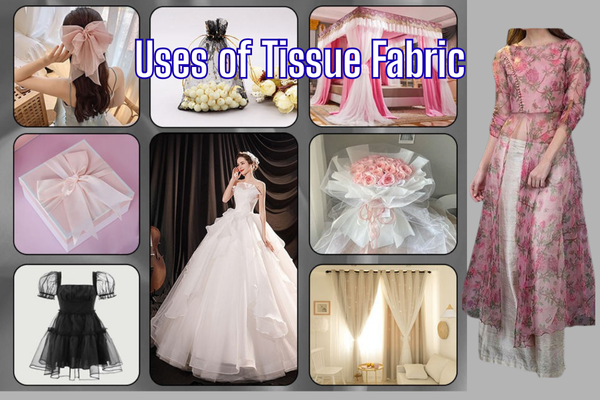
In India alone, over 10 million meters of tissue fabric are used annually in wedding outfits. Designers love it for lehenga cholis, sarees, and dupattas because it screams celebration.
Home Decor Elements
Ever seen shimmering curtains or ornate cushion covers? That’s probably tissue doing its job—adding elegance without overpowering the space.
Designer Accessories
From clutches to stoles, tissue makes accessories look rich. Lightweight and shiny make the perfect style formula.
Stage Costumes & Couture
Its shine catches stage lights beautifully. Dance troupes and theatrical designers swear by tissue fabric for that magical visual pop.
Pros and Cons of Tissue Fabric
The Good Stuff
- Looks luxurious without being heavy
- Breathable, making it wearable in warm weather
- Pairs well with embroidery and embellishments
- Photographs beautifully due to its reflective quality
The Challenges
- Snags easily—even a ring or rough nail can pull a thread
- Not very absorbent—not ideal for everyday wear
- Wrinkles easily and needs gentle care
How to Care for Tissue Fabric
Washing Tips
Never toss it in the washer—hand wash only with cold water and a mild detergent. Avoid wringing it like an old dishcloth.
Ironing & Storing
Use a low-heat iron under a cotton cloth. Hang it on padded hangers or store it flat. Folding causes creases that might never forgive you.
Handling Snags & Tears
Caught a thread? Don’t pull—clip it gently with fine scissors. For tears, hand-stitching with matching thread is your safest bet.
How It Compares: Tissue vs Other Lightweight Fabrics
Tissue vs Organza
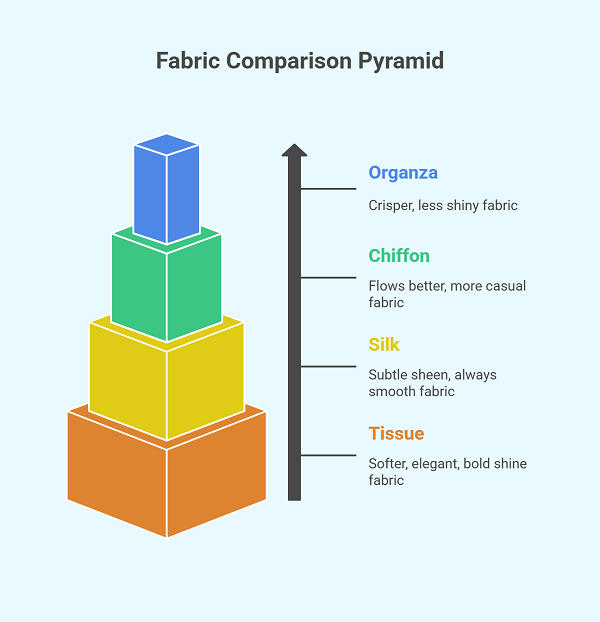
- Organza is crisper, but less shiny
- Tissue is softer and more elegant in fall
Tissue vs Chiffon
- Chiffon flows better, tissue holds structure
- Tissue adds more glam, chiffon is more casual
Tissue vs Silk
- Silk = subtle sheen, Tissue = bold shine
- Tissue can be stiffer, silk is always smooth
Final Thoughts
Tissue fabric is like the secret ingredient in haute couture—it doesn’t always shout, but when it does, it dazzles. It combines the fragility of lace with the power of metallic shine. While it may not be your go-to for a daily grocery run, it sure makes you feel like royalty when the occasion calls for it. And let’s be honest don’t we all deserve a little shine sometimes?
FAQs
1. Is tissue fabric suitable for summer wear?
Yes. Despite its rich look, it’s surprisingly breathable, perfect for summer weddings and events.
2. Can I use tissue fabric for curtains?
Absolutely. Many designers use it for sheer panels, especially when they want light diffusion with shimmer.
3. Is tissue fabric expensive?
It depends on the fiber. Silk tissue costs around $15–$25/meter, while polyester versions start at $5/meter.
4. How do I know if my fabric is real tissue?
Look for the shimmer, transparency, and a slightly crisp yet soft hand feel. Genuine tissue also has a delicate structure.
5. What kind of embroidery works best on tissue?
Zari, sequin, and stone work are popular. Go for light embroidery styles that don’t weigh the fabric down.
