
What Is Rayon Fabric?
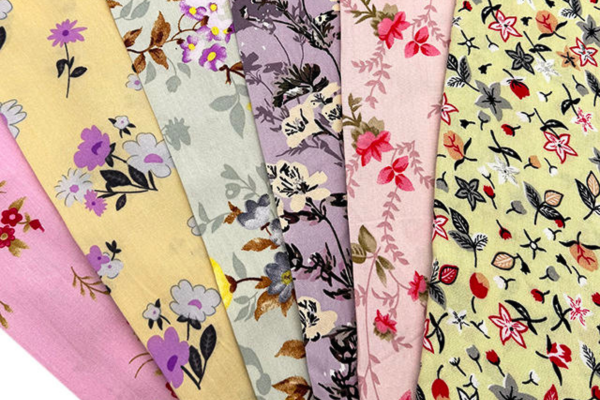
Rayon fabric is a semi-synthetic textile that acts like a chameleon in the fashion world. It’s made from natural wood pulp but processed with chemicals, giving it the softness of silk, the drape of cotton, and the smoothness of polyester. Confusing? Totally. But versatile? Absolutely.
Table of Contents
Rayon is often called “artificial silk” for a reason. It blends luxury with affordability — imagine a silk dress that doesn’t bankrupt you. That’s rayon in a nutshell.
History and Evolution of Rayon
The Birth of Artificial Silk
Back in the 1880s, scientists in France were on a mission to make affordable silk. Their answer? Rayon. By 1924, it was officially named “rayon” in the U.S. In fact, rayon was the first man-made fiber to be produced commercially.
Rayon’s Journey into Mainstream Fashion
By the 1940s, rayon fabric had flooded wardrobes. It was cheap, shiny, and mimicked expensive materials. Hollywood loved it, housewives wore it, and manufacturers mass-produced it. Safe to say, rayon became everyone’s new best friend.
How Is Rayon Fabric Made?
From Wood Pulp to Threads
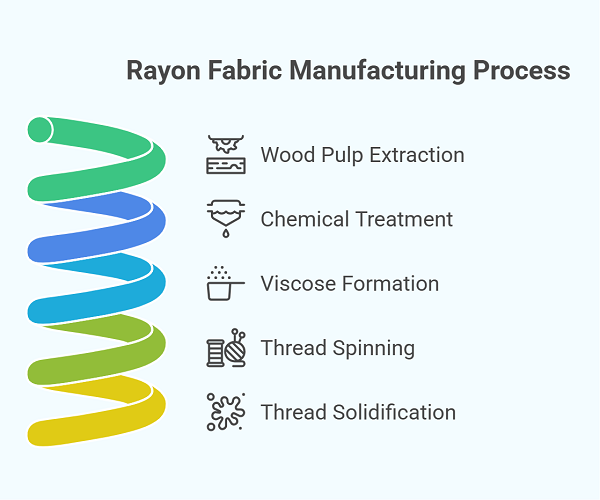
Rayon starts with wood pulp from trees like beech, pine, or eucalyptus. But here’s the twist — it’s not woven right away. It undergoes a chemical transformation, almost like turning flour into cake batter before baking.
The Chemical Magic Behind Rayon
The pulp is treated with sodium hydroxide and carbon disulfide to create a thick solution, known as viscose. This gooey liquid is then spun into fine threads and solidified. Boom — you have rayon fabric ready to weave.
Types of Rayon Fabric
Viscose Rayon
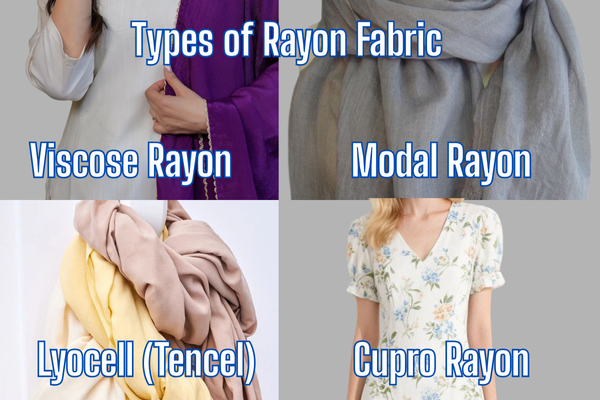
The most common type. Soft, drapey, and breathable. It’s everywhere — from shirts to summer dresses. But it wrinkles like it has a personal grudge against ironing.
Modal Rayon
Made from beech trees and processed in a slightly cleaner way. Modal is stretchier and stronger than regular rayon, perfect for activewear and underwear.
Lyocell (Tencel)
Sustainably processed using closed-loop systems. It’s soft, moisture-wicking, and bacteria-resistant. A little fancy, a lot eco-friendlier.
Cupro Rayon
Made from cotton linter, the fluffy waste part of the cotton plant. Cupro gives you a silk-like feel with a conscience — and yes, it’s vegan-friendly.
Key Properties of Rayon Fabric
Texture and Feel
Rayon feels like luxury. It’s soft, smooth, and flows well. Think silk on a budget.
Breathability and Comfort
Rayon is highly breathable. Perfect for tropical climates. In fact, studies show rayon wicks 50% more moisture than cotton.
Durability and Maintenance
Not its strongest suit. Rayon can weaken when wet, and some types shrink like crazy. Handle with care, or it’ll rebel in the wash.
Pros and Cons of Rayon Fabric
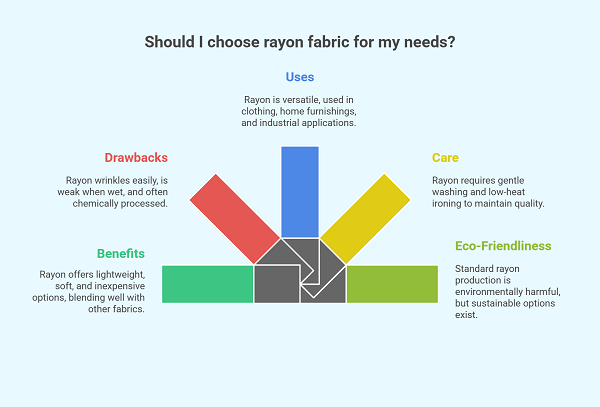
The Benefits That Make It Shine
- Lightweight and airy
- Drape and softness that rivals silk
- Inexpensive compared to natural fibers
- Blends well with cotton and polyester
The Drawbacks You Should Know
- Wrinkles easily
- Weak when wet
- Often chemically processed
- Not always eco-friendly unless labeled otherwise
Rayon Fabric Uses in Real Life
Everyday Clothing
From t-shirts and skirts to scarves and pajamas, rayon pops up in casual and dressy clothes alike. Over 30% of fast-fashion garments include rayon blends.
Home Furnishings
Rayon isn’t just for clothes. You’ll find it in bedsheets, curtains, and upholstery. It gives home textiles a premium look without a premium price.
Industrial Applications
Used in surgical products, tire cords, and bandages. Rayon’s absorbency and smoothness come in handy in more ways than you’d expect.
How to Care for Rayon Fabric
Washing and Drying Tips
Handwashing is safest. If machine washing, go gentle. Avoid hot water. Rayon hates heat like cats hate baths.
Ironing and Storage Guidelines
Use a low heat setting while ironing. Hang it up instead of folding to avoid creases. Trust me — it’s worth the closet space.
Is Rayon Fabric Eco-Friendly?
Environmental Impact
Standard rayon production uses toxic chemicals like carbon disulfide, which can harm workers and ecosystems. Over 150,000 tons of carbon disulfide are used globally in textile production each year — yikes.
Sustainable Rayon Options
Look for labels like “Lenzing,” “EcoVero,” or “TENCEL™.” These brands follow strict eco-standards and use closed-loop processing, reducing waste and pollution.
Conclusion
Rayon fabric is like that friend who can pull off any outfit at any event — stylish, adaptable, and surprisingly affordable. Sure, it’s got its flaws. It wrinkles. It demands gentle care. But it also offers versatility and comfort that few fabrics can match.
If you’re looking for softness without the silk price tag, breathability without the sweat, or just want to look fancy without trying too hard, rayon fabric might just be your perfect match.
FAQs
1. Is rayon fabric breathable for hot weather?
Yes. Rayon is breathable and ideal for warm climates. It absorbs moisture and keeps you cool.
2. Can rayon be machine washed?
It depends. While some rayons survive gentle cycles, others prefer handwashing. Always check the label.
3. Is rayon better than cotton?
Each has its pros. Rayon is softer and silkier, while cotton is sturdier and easier to wash.
4. Does rayon shrink after washing?
Yes, especially if washed in hot water or dried in heat. Stick to cool water and air-drying.
5. Is rayon fabric sustainable?
Standard rayon isn’t. But sustainable variants like Lyocell or EcoVero are more eco-conscious.
