
What is TC Fabric?
TC fabric is polyester cotton blend fabric used in pocketing of the garments mainly.
The word TC fabric comes from Terylene Cotton. It combines the strength of polyester with the softness of cotton. Common in both fashion and industrial settings, TC fabric has carved a sweet spot between affordability, function, and comfort.
Common pocketing fabric composition, construction, width and price as follows:
| SL | Fabric Description | Construction / GSM | Width | White ($/yd) | Black ($/yd) |
| 1 | TR Fabric | 75D×75D, 133×72, 60 GSM | 57/58″ | 0.37 | 0.41 |
| 2 | TR Fabric | 75D×75D, 78 GSM | 57/58″ | 0.43 | 0.47 |
| 3 | TR Herringbone Fabric | 100D×100D, 110×80, 85 GSM | 57/58″ | 0.47 | 0.51 |
| 4 | TR Fabric | 75D×150D, 85 GSM | 57/58″ | 0.53 | — |
| 5 | TR Fabric | 75D×150D, 110 GSM | 57/58″ | 0.60 | — |
| 6 | TR Twill Fabric | 68D×68D, 72 GSM | 57/58″ | 0.35 | 0.40 |
| 7 | TR Stretch Fabric | 75D×75D, 75 GSM | 57/58″ | 0.60 | 0.65 |
| 8 | TR Stretch Fabric | 100D×100D, 96 GSM | 57/58″ | 0.65 | 0.72 |
| 9 | TR Stretch Fabric | 150D×150D, 120 GSM | 57/58″ | 0.73 | 0.80 |
| 10 | TR 4-Way Stretch Fabric | 100D+20D/2, 118 GSM | 57/58″ | 0.70 | 0.77 |
| 11 | TR High Stretch Fabric | 75D×75D, 125 GSM | 57/58″ | 0.77 | 0.82 |
| 12 | TR Peached Fabric | 75D×150D, 75 GSM | 57/58″ | 0.49 | — |
| 13 | TR Peached Fabric | 75D×150D, 95 GSM | 57/58″ | 0.57 | — |
| 14 | T/C 90/10 | 96×72, 88 GSM | — | 0.58 | 0.63 |
| 15 | T/C 80/20 | 96×72, 90 GSM | — | 0.61 | 0.66 |
| 16 | T/C 65/35 | 110×76, 100 GSM | — | 0.70 | 0.80 |
| 17 | T/C Herringbone 80/20 | 100D, 110×76, 90 GSM | — | 0.59 | 0.65 |
| 18 | T/C Herringbone 80/20 | 32S, 100D, 110×80, 110 GSM | — | 0.62 | 0.69 |
| 19 | T/C 65/35 | 133×72, 115 GSM | — | 0.77 | 0.91 |
| 20 | 100% Polyester Mesh | 75D, 60 GSM | 59/60″ | 0.38 | 0.38 |
| 21 | 100% Polyester Mesh | 75D, 95 GSM | 59/60″ | 0.45 | 0.45 |
| 22 | 100% Polyester Jersey | 75D, 85 GSM | 59/60″ | 0.50 | 0.50 |
| 23 | 100% Polyester Interlock | 75D, 110 GSM | 59/60″ | 0.52 | 0.52 |
| 24 | 100% Polyester Tricot | 68D, 75 GSM | 59/60″ | 0.40 | 0.40 |
| 25 | 100% Polyester Tricot | 68D, 150 GSM | 59/60″ | 0.70 | 0.70 |
| 26 | 100% Polyester Tricot | 50D, 140 GSM | 59/60″ | 0.73 | 0.73 |
| 27 | 100% Polyester Tricot | 50D, 110 GSM | 59/60″ | 0.52 | 0.52 |
| 28 | TC 65%P/35%C Jersey | 26S, 155 GSM | 59/60″ | 0.80 | 0.80 |
Table of Contents
Composition and Structure of TC Fabric
What does TC stand for?
“TC” simply stands for Terylene Cotton, where Terylene is a trademarked name for polyester. It reflects a fabric blend where polyester takes the lead role.
Polyester vs Cotton ratio in TC fabric
The blend ratio matters. Polyester is hydrophobic and durable. Cotton, on the other hand, is breathable and skin-friendly.
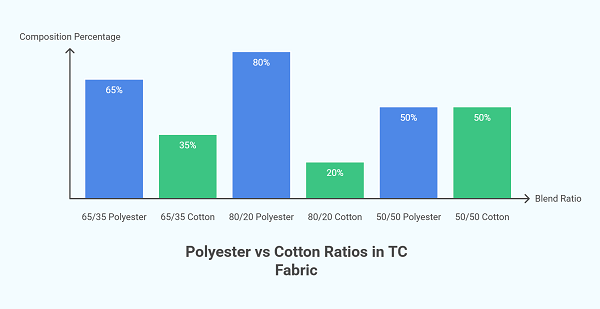
Most TC fabrics lean toward a higher polyester ratio, generally around 65% polyester and 35% cotton (65/35). But don’t be surprised if you find 80/20 blends or even 50/50 mixes in the market.
| Blend Ratio | Common Use |
| 65/35 | School uniforms, shirts, workwear |
| 80/20 | Industrial wear, hotel linens |
| 50/50 | Budget-friendly daily clothing |
Properties of TC Fabric
Strength and Durability
Polyester gives TC fabric its toughness. It’s 30% stronger than cotton on average and resists tearing under stress. That’s why many workwear manufacturers love it.
Softness and Comfort
Despite being tough, the cotton in TC fabric adds comfort and breathability. No one likes a shirt that feels like a tent tarp. The cotton component prevents that.
Wrinkle and Shrink Resistance
Let’s be honest—no one really likes ironing. TC fabric holds its shape well, doesn’t wrinkle easily, and shrinks less than pure cotton after multiple washes.
Uses of TC Fabric in Everyday Life
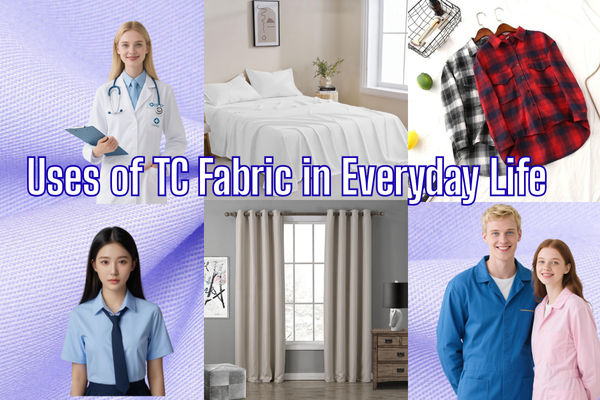
TC mainly used in the pocketing fabric, sometime uses as a shell fabric as well.
Clothing and Uniforms
From school uniforms to chef coats, TC fabric dominates where long-lasting and low-maintenance clothing is required. It’s affordable and reliable.
Bedsheets, Curtains, and Home Textiles
Need sheets that feel good but don’t bankrupt you? TC bedsheets are the go-to in hotels and hospitals due to their durability and crisp finish.
Industrial and Commercial Applications
Think aprons, cleaning cloths, tote bags, and promotional wear. Anywhere cost meets function, TC fabric fits right in.
TC Fabric vs Other Fabrics
TC vs 100% Cotton
| Feature | TC Fabric | 100% Cotton |
| Durability | Higher | Moderate |
| Comfort | Moderate to high | High |
| Shrinkage | Low | High |
| Wrinkle-resist | Good | Poor |
| Price | Lower | Higher |
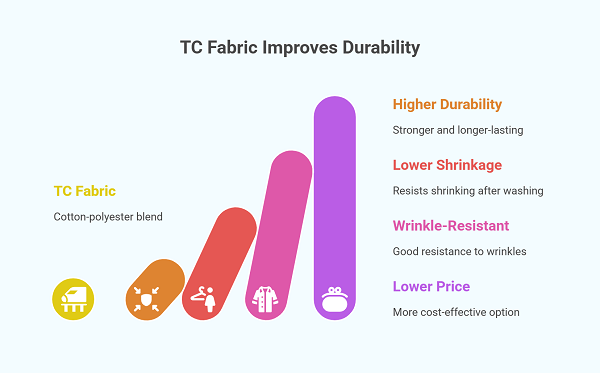
Cotton wins in comfort. TC wins in maintenance.
TC vs CVC Fabric
CVC (Chief Value Cotton) means cotton dominates the blend—usually a 60/40 or 70/30 cotton-polyester split. If you want softer feel with decent durability, CVC might edge out TC.
TC vs Polyester
100% polyester feels synthetic—because it is. TC tones that down with cotton. Polyester-only fabrics trap heat and sweat, which TC helps regulate.
Care Tips for TC Fabric
Washing and Drying
- Machine wash in warm water (40°C).
- Avoid hot drying to reduce static.
- Use mild detergent.
Ironing and Storage Tips
- Use low to medium heat while ironing.
- Store folded to maintain structure.
Pro tip: Skip the dryer. It wears out TC fibers faster.
Pros and Cons of TC Fabric
Advantages
- Wrinkle-resistant
- Cost-effective
- Strong and long-lasting
- Fade-resistant colors
- Easy to dye and print on
Limitations
- Less breathable than pure cotton
- Not ideal for extreme heat
- Can feel slightly synthetic
Is TC Fabric Sustainable?
Let’s not sugarcoat it—polyester isn’t exactly eco-friendly. But the longevity of TC fabric means fewer replacements and less textile waste.
Recyclability and Environmental Impact
Polyester is recyclable, but cotton is biodegradable. Together, TC fabric sits in the gray zone. However, some manufacturers are now using recycled polyester yarn, giving TC a greener edge.
Eco-friendly alternatives
- Organic cotton blends
- Recycled polyester fabrics
- Tencel-cotton hybrids
Conclusion
TC fabric is the unsung hero in your wardrobe and household. It’s tough, easy to care for, and strikes a solid balance between price and performance. Whether you’re looking for school uniforms, bed linens, or promotional wear, this blend checks most boxes. Sure, it’s not 100% natural. But in a fast-paced world, TC fabric delivers comfort without breaking the bank—or the laundry routine.
FAQs
1. What does 65/35 TC fabric mean?
It means the fabric is made of 65% polyester and 35% cotton, offering durability with a touch of softness.
2. Is TC fabric good for hot climates?
It’s okay for moderate heat, but pure cotton breathes better in extremely hot and humid areas.
3. Can TC fabric be dyed easily?
Yes, it holds dye well and offers vibrant colors with minimal fading.
4. Does TC fabric shrink after washing?
It shrinks far less than cotton, making it ideal for repeated washes.
5. Is TC fabric good for sensitive skin?
It’s generally safe, but for extremely sensitive skin, fabrics with higher cotton content are better.
