
You’ve seen it on uniforms, maybe even worn it in school. But what exactly is Serge fabric? It’s not some fancy term for “wool with attitude.” Serge is a classic, sturdy, and sleek textile that’s stood the test of time—and wrinkles.
Table of Contents
Let’s break it down and see why this fabric refuses to go out of style.
What Is Serge Fabric?
Basic Definition
Serge fabric is a strong, medium to heavyweight textile. It’s woven using a distinct diagonal twill weave. This gives it a slanted pattern that looks a bit like tightly combed rows. The material often comes from wool, but sometimes includes cotton, silk, or synthetic blends.
How It’s Made
The magic of serge lies in its twill structure. Manufacturers use tightly twisted yarns. They weave these yarns in a 2-over-2-under pattern. This not only boosts the strength but also creates that signature diagonal texture.
Numbers? Sure. Serge usually ranges between 250 to 400 GSM. That’s grams per square meter—a measurement of weight. Heavier than poplin, lighter than denim.
The Diagonal Twill Weave Explained
Why diagonals? Simple—strength and style. This weave reduces fabric stress and gives the cloth more flexibility. Think of it like rebar in concrete. Without it, things fall apart.
Key Characteristics of Serge Fabric
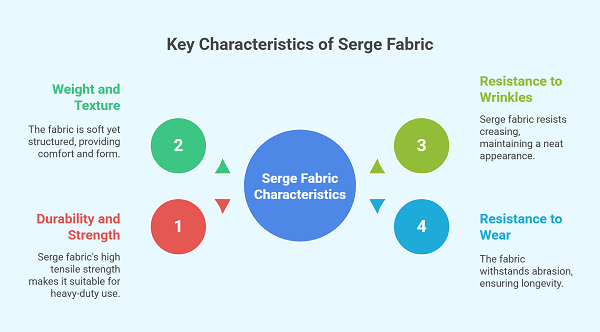
Durability and Strength
Serge fabric isn’t flimsy. In tensile strength tests, it typically scores 20–30% higher than plain weave wool. That’s why it’s perfect for heavy-duty use—military jackets, marching band uniforms, pilot coats.
Weight and Texture9
Soft yet structured. That’s serge for you. It has a firm hand but doesn’t scratch like cheaper wool. It’s dense but not suffocating.
Resistance to Wrinkles and Wear
One word: reliable. The fabric doesn’t crease easily. And if you’ve ever sat through an eight-hour shift in a suit, you know that matters.
In abrasion tests, serge outperforms many other wools. It can survive over 20,000 rubs on the Martindale test without visible wear.
Common Applications of Serge Fabric
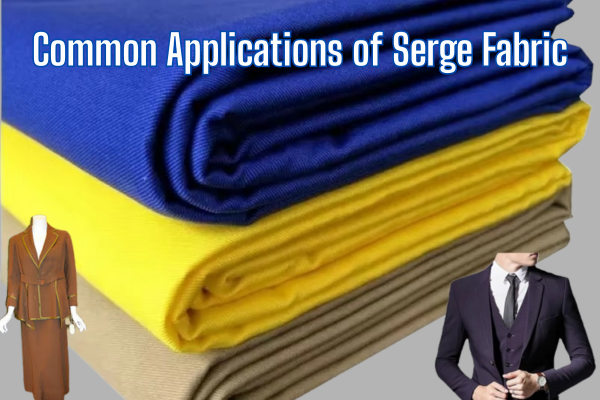
Military and Police Uniforms
Fun fact: the British army used serge as early as the 17th century. Why? Because it’s tough. Even today, serge fabric remains a go-to for dress uniforms across law enforcement and defense sectors.
Formalwear and Business Suits
Ever owned a navy blue suit with a subtle shine and smooth structure? Odds are, it was made from wool serge. It’s structured enough for tailoring and soft enough to wear without a vest full of regret.
Upholstery and Home Furnishing
Some high-end home décor brands use cotton serge for curtains and cushion covers. The fabric resists fading and holds shape like a pro. Yes, your sofa can dress better than you.
Serge Fabric vs. Other Twill Weaves
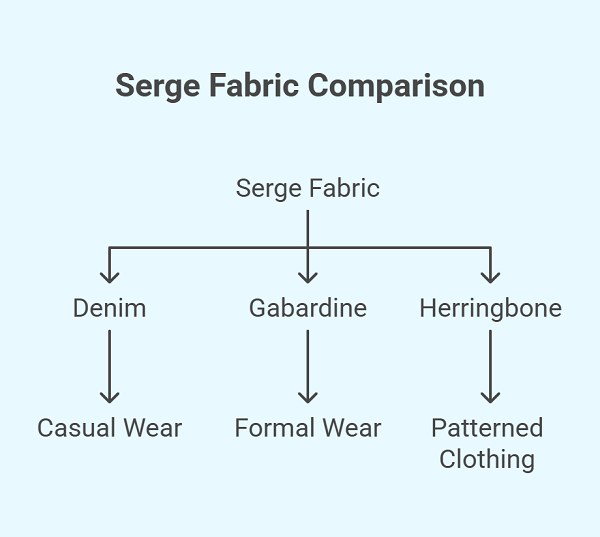
Serge vs. Denim
Denim’s heavier, more casual, and has a coarser weave. Serge? Finer, smoother, and a touch more posh. Denim ages; serge endures.
Serge vs. Gabardine
Both use twill weave. But gabardine is tighter, shinier, and less breathable. Serge breathes better, making it ideal for all-day wear.
Serge vs. Herringbone
Herringbone has a zigzag pattern. Serge keeps it straight and diagonal. For those who like their patterns organized—not wild.
Benefits and Drawbacks of Using Serge Fabric
Pros
- Strong and durable (seriously, it’s a fabric tank)
- Drapes beautifully
- Doesn’t wrinkle easily
- Looks expensive (even if it isn’t)
- Works well for tailoring
Cons
- Can feel warm in summer
- Pure wool serge may shrink if washed wrong
- Not stretchy—so skip it for yoga pants
Care Tips for Serge Fabric Garments
Washing and Drying
If it’s wool serge, dry clean only. Cotton serge? You can machine wash on cold and air dry. High heat = bad news.
Ironing and Storage
Use a steam iron on low. Always press with a cloth in between. Hang it, don’t fold it. Moths love crumpled wool.
Final Thoughts
Serge fabric might not be flashy. But in a world chasing trends, it’s the smart kid in a tailored coat who never tries too hard. Whether you’re suiting up for duty or dressing to impress, serge fabric offers structure, durability, and a timeless appeal.
Honestly? It just works.
FAQs
1. Is serge fabric good for hot weather?
Not really. Serge traps heat due to its dense weave. Lighter weaves like linen are better for summer.
2. What’s the best way to identify serge fabric?
Look for the diagonal ridges and a slightly stiff, crisp feel. Wool serge has a matte look; cotton serge has more sheen.
3. Can I use serge fabric for DIY tailoring?
Yes. It holds shape well and responds nicely to pressing. Just pre-test your pattern with a muslin.
4. Is serge fabric eco-friendly?
Wool serge is biodegradable. Cotton serge depends on how it’s processed. Look for OEKO-TEX® certification.
5. Why is serge fabric used in military clothing?
Because it’s durable, maintains shape, and resists wrinkling. It also gives a professional, crisp look.
