
If you think shipping garments is just about packing boxes and waving goodbye—well, buckle up. There’s a whole lot more going on behind the scenes. Before a shirt or pair of jeans reaches the store shelf, it goes through the full process of garments inspection and shipment, complete with rigorous quality control and a checklist longer than your last grocery list. And trust me, one wrong stitch? That can delay an entire shipment.
Table of Contents
Let’s walk through how the process works from the inspection room to the cargo truck—and sprinkle in some real-world stats along the way.
What Is Garments Inspection?
Definition and Purpose
Garments inspection is the quality control process done before shipment. Think of it like airport security—but for clothes. No stain, no loose thread, no missing buttons shall pass.
The purpose? Simple. Brands want their clothes to meet customer expectations. If a $70 shirt shows up with uneven sleeves, guess what? That customer never comes back.
Common Inspection Types
Factories treat garments inspection and shipment as a combined effort. Every inspection step directly affects how smoothly the shipment will go. Inline and final inspections aren’t just about defect detection—they’re checkpoints to ensure the shipping process won’t hit a snag later.
Let’s break it down. Most garment manufacturers follow these types of inspection:
- Initial Inspection (Raw Material)
Before cutting starts, fabric gets tested for GSM, shrinkage, colorfastness, and more. - Inline Inspection
During sewing, random pieces are checked. This helps catch issues early—like a thread tension problem or skipped stitch. - Final Inspection (Pre-Shipment)
100% of AQL (Acceptable Quality Level) checks are done. This is the last line of defense.
What is AQL in Inspection?
AQL is the secret sauce. It tells you how many defective pieces are allowed per shipment. For example:
| AQL Level | Sample Size | Acceptable Defects |
| 1.0 | 200 | 2 |
| 2.5 | 315 | 10 |
| 4.0 | 500 | 21 |
Most fashion brands stick to AQL 2.5.
What Happens After Inspection? The Shipment Stage
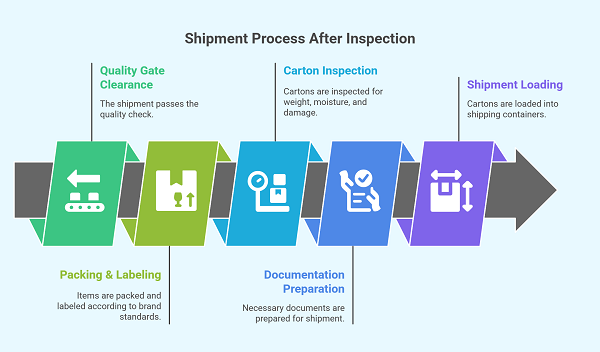
Once the quality gate is cleared, it’s time to box things up and move them out. But again, it’s not just taping cartons shut.
Packing & Labeling
During garments inspection and shipment, packing isn’t just a formality—it’s an audit requirement. Buyers check how the goods are folded, how labels are placed, and how garments are sealed. If anything’s off, they don’t hesitate to reject entire cartons. Each piece needs to be folded, poly-bagged, tagged, and barcoded. Brands have strict instructions. For example:
- Zara requires folding width to match exact shelf dimensions.
- H&M often mandates eco-friendly polybags.
A misprinted tag? That could cost a vendor a $5,000 chargeback.
Carton Inspection
Before loading, cartons are:
- Weighed
- Checked for moisture using hygrometers
- Measured for damage and alignment
A shipping container isn’t a dry, safe vault. It’s a metal oven crossing oceans. So, if the carton isn’t moisture-resistant? Hello, mold.
Documentation for Shipment
Now comes the paperwork party:
- Packing List
- Commercial Invoice
- Bill of Lading
- Certificate of Origin
- Inspection Certificate
Forget one document, and customs will happily detain your $100,000 worth of goods.
Common Defects That Delay Shipments
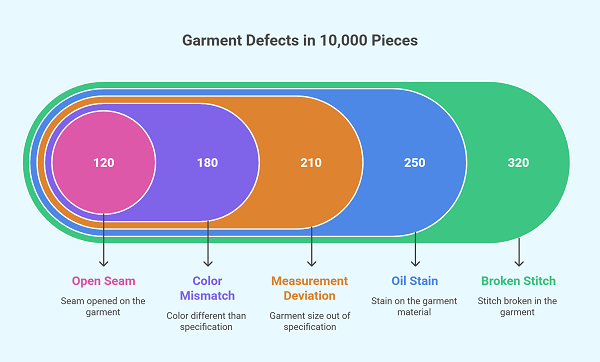
Understanding common defects is critical in the garments inspection and shipment pipeline. Even a small oversight like a color mismatch can delay loading and, worse, lead to rework costs.
Let’s get real. Even experienced factories mess up. Here’s a quick look at defects and how often they appear:
| Defect Type | Frequency in 10,000 pcs |
| Broken Stitch | 320 |
| Oil Stain | 250 |
| Color Mismatch | 180 |
| Measurement Deviation | 210 |
| Open Seam | 120 |
Most buyers allow less than 1% major defects.
A 2.1% defect rate in a 30,000 pcs order? That’s 630 defective garments. And that means shipment delay + penalty.
Real-Life Shipment Challenges
When people talk about shipping delays, they often overlook the first half—garments inspection and shipment decisions made at the factory level. The truth is, many delays aren’t about the port or the truck—they start with poor inspection outcomes. Let me throw some stories at you.
Story 1:
A Bangladesh factory packed all shirts facing left instead of right. Buyer refused 10,000 units. Cost of repacking: $3,200.
Story 2:
A box was overloaded, weighing 42kg instead of the airline’s 32kg limit. The penalty? Air freight cost increase by 40%.
Moral? Every detail matters. From box dimensions to barcode placement.
How to Ensure Smooth Inspection & Shipment
Factory Best Practices
- Train QA inspectors quarterly
- Maintain AQL checklists at every station
- Use metal detectors for needle control
- Conduct mock shipment reviews before final packing
Tech to the Rescue
Modern factories use:
- ERP systems to track orders and defect logs
- Barcode scanning for inventory precision
- Cloud-based QA dashboards for real-time updates
Still using paper checklists? That’s like using dial-up internet in 2025.
Conclusion
Garments inspection and shipment aren’t just backend operations—they’re frontline soldiers protecting your brand’s reputation. A tiny defect or a late shipment can cost you thousands in penalties or worse, lost customers.
So, whether you’re a startup fashion label or a 10-million-unit exporter, invest in inspection. Nail your shipment process. And never, ever underestimate the power of a well-folded shirt in a sturdy box.
FAQs
1. What does AQL mean in garments inspection?
AQL (Acceptable Quality Limit) defines how many defective pieces are allowed per sample size. It’s used to decide if a shipment passes or fails inspection.
2. How long does a typical garment inspection take?
For 500 pieces, an AQL 2.5 inspection takes about 3 to 5 hours, depending on complexity and staff efficiency.
3. Can garments be shipped without inspection?
Technically, yes. But it’s risky. Most buyers mandate third-party or internal inspections before accepting goods.
4. Who conducts the inspection before shipment?
Either the factory’s internal QC team or third-party auditors like SGS, Intertek, or Bureau Veritas.
5. What causes most shipment delays in garments?
Top causes include high defect rates, documentation errors, labeling issues, and port congestion.
