
What is Interlock Fabric?
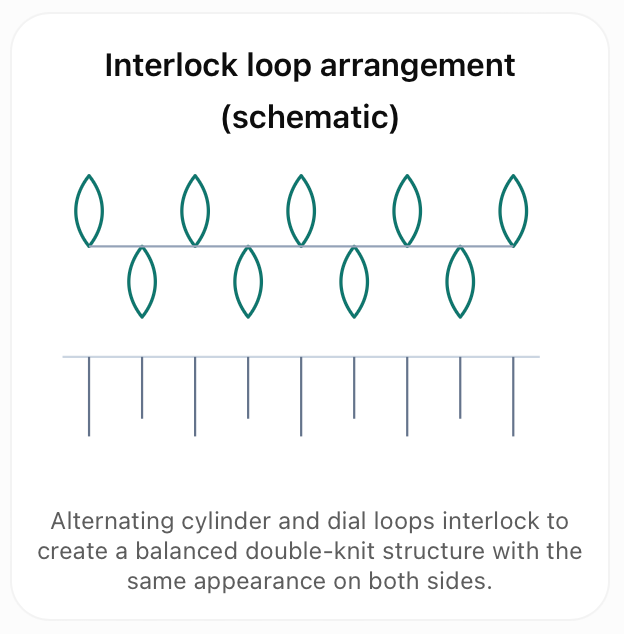
Interlock fabric is a type of double-sided weft knitted jersey made of a technical face (V-loop shape). A circular knitting machine uses two sets of needles arranged in opposite needle beds. It consists of two 1×1 rib structures intermeshed together. resulting in a fabric with an identical appearance on both sides. Interlock fabric has excellent dimensional stability, higher thickness, and improved elasticity compared to single jersey fabric.
Technical Characteristics
- Fabric Type: Weft knit → Double knit → Interlock
- Structure: Two interconnected 1×1 rib fabrics
- Machine: Interlock circular knitting machine (dial and cylinder needles)
- Appearance: Smooth and identical on both face and back
- Thickness: Thicker than single jersey fabric.
- Stretch: Good stretch with excellent recovery
- Dimensional Stability: Better than single jersey and rib fabrics
- Edge Curling: Does not curl at edges
Table of Contents
It’s thicker, more stable, and has a smoother surface on both sides. In fact, you might’ve worn interlock without knowing—yoga pants, polos, even baby rompers. Yep, it’s everywhere.
How Is Interlock Fabric Made?
Common Fiber Contents:
- 100% Cotton
- 100% Polyester Interlock
- Cotton/Spandex
- Polyester/Spandex Interlock
- Cotton/Polyester blends
- Viscose blends (e.g., 65% Viscose, 35% Polyester Interlock Jersey Fabric)
The Double Knit Construction
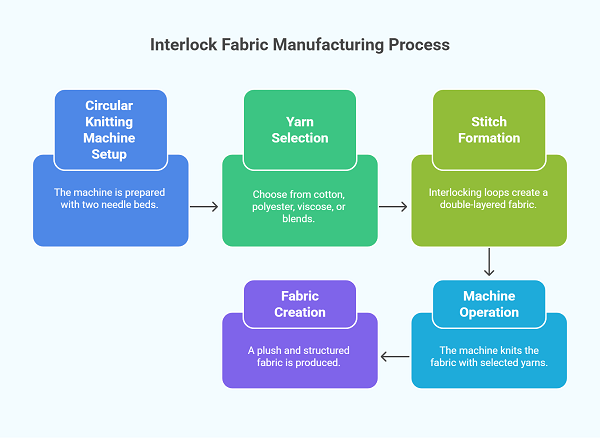
Interlock fabric is created using a circular knitting machine with two needle beds that work together. Each row of stitches is connected by interlocking loops. This structure results in a double layer of fabric that feels plush and structured.
Yarns, Machines, and Stitch Types
Most commonly, cotton, polyester, viscose, or blends are used. The yarn count usually falls between 20s to 40s, depending on the application. Fine-gauge machines (like 28 GG) are often used for a softer, tighter finish. If this sounds technical, just remember: tighter stitch = smoother fabric.
Characteristics of Interlock Fabric
Stretch and Recovery
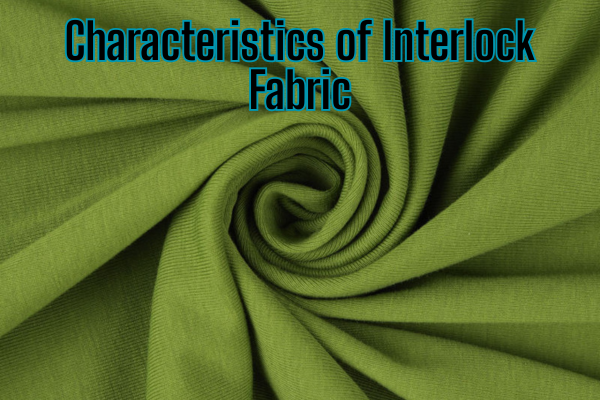
Interlock fabric has horizontal stretch, but it’s not the same as spandex. It stretches gently and snaps back well, making it perfect for fitted garments. Unlike loose jersey knits that sag like old socks, interlock holds its shape like a champ.
Thickness and Softness
The fabric is thick enough to offer opacity, but soft enough to make you question if you’re wearing clouds. A typical interlock weighs between 180 to 240 GSM, making it ideal for year-round wear.
Durability and Resistance
Despite its softness, this fabric is a beast. It resists pilling, doesn’t unravel easily, and has good abrasion resistance. It’s not bulletproof, but for textiles, it comes close.
Common Uses of Interlock Fabric
Fashion and Apparel Industry
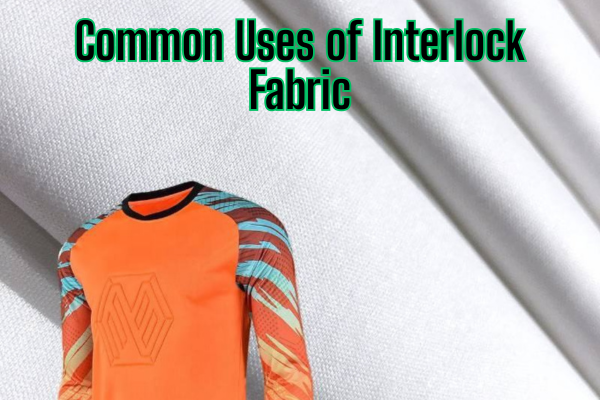
From T-shirts to dresses, interlock fabric serves as a staple. It’s clean, structured, and doesn’t curl at the edges like single jersey. Great for prints and embroidery too.
Sportswear and Athleisure
Thanks to its recovery and stretch, it’s widely used in leggings, sweatshirts, and yoga tops. It’s breathable enough for movement and thick enough for modesty—win-win.
Babywear and Undergarments
If it’s safe for baby skin, it’s good for us too. Interlock fabric is often used in baby bodysuits, onesies, and even cloth diapers. Hypoallergenic cotton interlocks rule here.
Benefits of Interlock Fabric Over Other Knits
Comparison with Single Jersey
| Property | Single Jersey | Interlock |
|---|---|---|
| Structure | Single knit | Double knit |
| Thickness | Lower | Higher |
| Stretch | Higher | Moderate |
| Stability | Lower | Higher |
| Edge Curling | Yes | No |
| Appearance | Different face and back | Same on both sides |
Interlock offers better stability and looks more polished.
Comparison with Rib Knit
| Feature | Interlock Fabric | Rib Knit |
| Surface | Smooth | Textured |
| Recovery | Moderate | High |
| Application | Casual/Fashion | Cuffs, collars |
Caring for Interlock Fabric
Washing Guidelines
- Machine wash cold (30°C)
- Use gentle detergent
- Avoid bleach
- Tumble dry low or hang to dry
Most interlock holds up to 100+ washes without losing integrity.
Storage Tips
Fold it, don’t hang it. Why? Because interlock doesn’t love gravity. Hanging can stretch it out over time.
Environmental Impact and Sustainability
Natural vs Synthetic Interlock
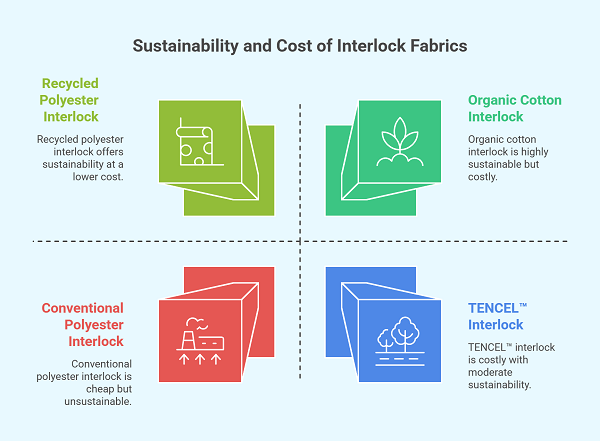
Cotton interlock is biodegradable, while polyester isn’t. So if you’re eco-conscious, go for organic cotton interlock. It costs a bit more, but your conscience will sleep better.
Recyclability and Eco-friendly Options
Several brands now use recycled polyester or TENCEL™ to make sustainable interlock knits.
Conclusion
Interlock fabric may not wear a cape, but it’s the superhero of versatile textiles. It’s strong, comfy, easy to care for, and used in everything from gym wear to baby gear. Whether you’re a fashion pro or just someone who loves comfy tees, interlock deserves a spot in your wardrobe—and your heart.
FAQs
1. Is interlock fabric good for summer wear?
Yes, lightweight interlock made of cotton or bamboo is breathable and comfortable in summer.
2. Can I print on interlock fabric?
Absolutely. Its smooth surface is ideal for screen printing and digital printing.
3. Is interlock fabric stretchy enough for yoga?
Yes, especially if blended with spandex. It stretches well and offers great recovery.
4. How does interlock fabric compare to fleece?
Interlock is lighter, smoother, and better for layering. Fleece is heavier and warmer.
5. Does interlock fabric shrink after washing?
If it’s pre-shrunk or made from synthetic blends, shrinkage is minimal. Always check labels.
